Female KOL Sparks Online Storm After Confronting Man Over Alleged Secret Photography in Central
SingTao · 1 SOURCESabout 3 hours ago3 MIN
Summary
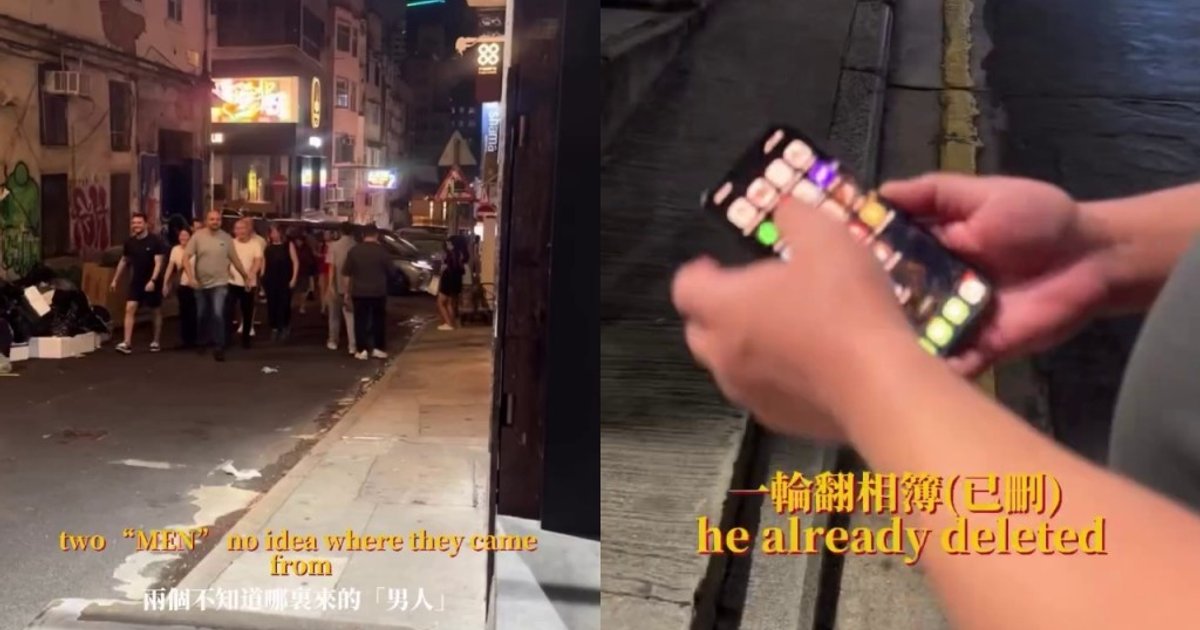
A female influencer and former Miss Hong Kong pageant contestant named Rachel Li has ignited a fierce online controversy after she posted a video on Threads claiming she was secretly photographed by a stranger in Central's Peel Street district on Monday, October 12. The confrontation escalated when Rachel chased down and questioned the man, who demonstrated his innocence by showing her his phone's photo album. Despite finding no evidence of secret photography, Rachel alleged the man had deleted the photos, calling him a "pervert" and shaming him for the sake of his family. The incident quickly drew widespread criticism from netizens who condemned Rachel for publicly shaming someone without presenting any concrete proof of wrongdoing. Rachel subsequently defended herself by citing specific provisions of Hong Kong's Criminal Ordinance regarding voyeurism and illegal photography of intimate parts, which can carry sentences of up to five years imprisonment. The debate highlights the tension between legitimate concerns about privacy violations and the principle that accusations must be supported by evidence before public shaming.
Key Points
- Rachel Li, a model and former Miss Hong Kong pageant contestant, posted a video on Threads on October 12 claiming a man secretly photographed her on Peel Street in Central
- The man showed Rachel his phone album to prove he had not taken secret photos, but Rachel accused him of deleting the evidence, saying "I don't know how he deleted the photos, but obviously he took them"
- Rachel also noted the man had photos of his children and family in his album, calling him a "pervert" whose behavior was shameful and a blight on the community
- Netizens criticized Rachel heavily, stating that Hong Kong has no portrait rights law, that she had no evidence, and that her public shaming was more unethical than the behavior she accused him of
- Rachel defended herself by citing Section 159AAC of the Criminal Ordinance (illegal photography of intimate parts) and Section 159AAB (voyeurism), which carries a maximum sentence of five years imprisonment
Why It Matters
This incident highlights the delicate balance between protecting individuals from unwarranted accusations and addressing genuine privacy concerns in public spaces. It underscores the importance of evidence-based accusations in Hong Kong's legal framework, where the presumption of innocence is a fundamental principle. The case also reflects broader social tensions around gender, privacy, and the role of social media in facilitating public trials without due process, prompting important discussions about responsible behavior when individuals believe their rights have been violated .
This incident highlights the delicate balance between protecting individuals from unwarranted accusations and addressing genuine privacy concerns in public spaces. It underscores the importance of evidence-based accusations in Hong Kong's legal framework, where the presumption of innocence is a fundamental principle. The case also reflects broader social tensions around gender, privacy, and the role of social media in facilitating public trials without due process, prompting important discussions about responsible behavior when individuals believe their rights have been violated .