Crispy Grass Carp Farming Sparks Animal Welfare Debate on Chinese Social Media
SingTao · 2 SOURCESabout 3 hours ago5 MIN
Summary
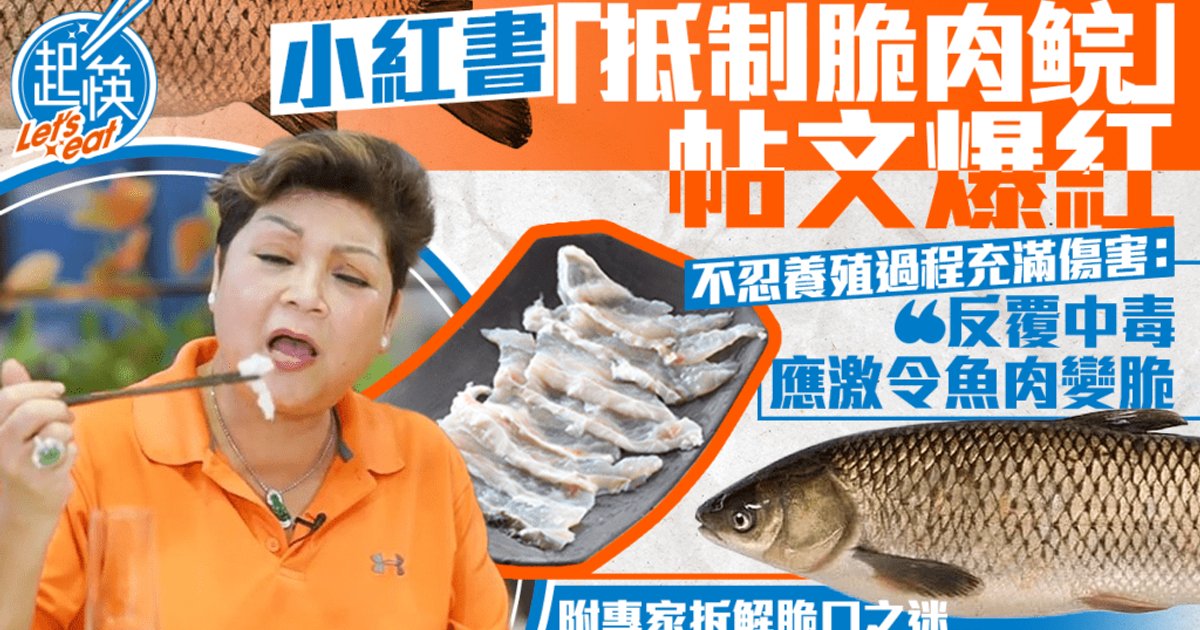
A viral post on Chinese social media platform Xiaohongshu has sparked fierce debate about animal welfare in the aquaculture industry, with a user calling for a boycott of crispy grass carp (脆肉鯇). The post, which garnered over 6,000 likes and 2,000 comments, criticized the farming method that gives the fish its distinctive tender-crisp texture as "cruel and abnormal." Meanwhile, scientific research from 2019 has provided a clearer explanation of the actual biological process involved.
Key Points
- The viral Xiaohongshu post described the crispy grass carp farming technique as causing repeated physiological stress to fish, comparing it to "human skin becoming fragile after multiple injuries" .
- The post received over 6,000 likes and more than 2,000 comments within days, triggering intense online debate between animal welfare advocates and defenders of traditional aquaculture .
- According to 2019 research by the Pearl River Fisheries Research Institute, farmers achieve the crispy texture by feeding grass carp exclusively on fava beans, which triggers a favism-like reaction causing hemolysis and hypoxia .
- Fish develop self-regulatory mechanisms including reduced activity, slowed sugar metabolism, and redistribution of fat from muscles to the abdominal cavity during the "crisping" process .
- The industry is developing improved feed alternatives, including fermented fava beans and feeds supplemented with tea polyphenols and vitamin E to reduce liver damage while preserving the signature texture .
Why It Matters
The controversy highlights growing consumer awareness of animal welfare in food production, particularly in Hong Kong where crispy grass carp is a popular hotpot ingredient. As the Greater Bay Area deepens economic integration, such ethical debates over traditional farming practices could influence cross-border food trade standards and consumer preferences in the region .
The controversy highlights growing consumer awareness of animal welfare in food production, particularly in Hong Kong where crispy grass carp is a popular hotpot ingredient. As the Greater Bay Area deepens economic integration, such ethical debates over traditional farming practices could influence cross-border food trade standards and consumer preferences in the region .