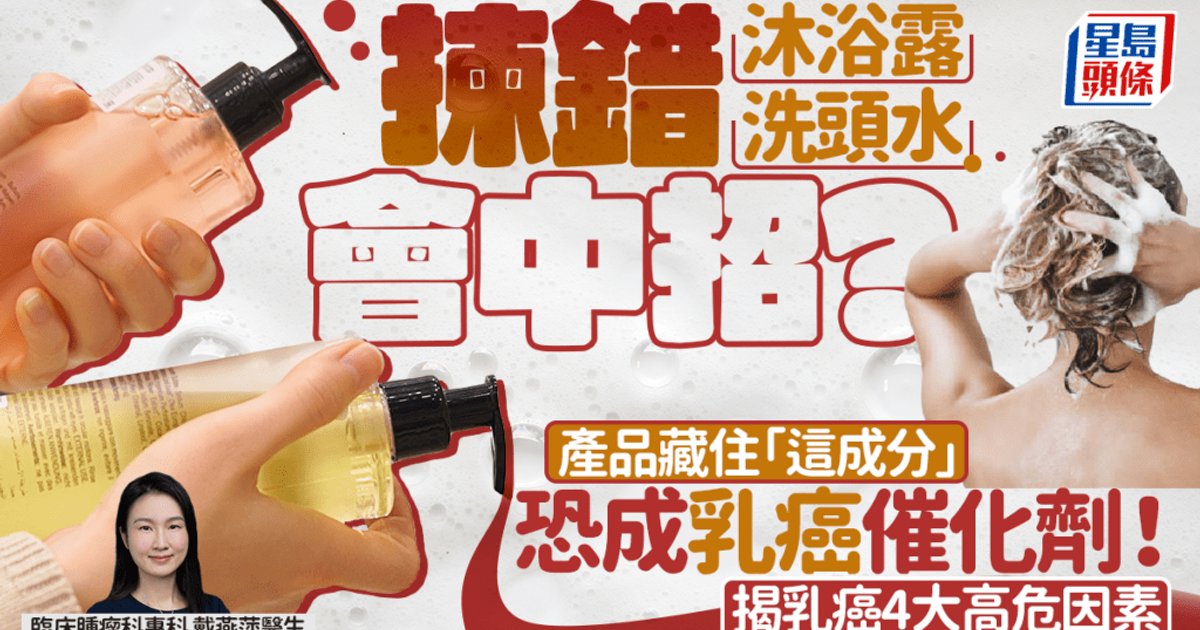
Breast cancer warning over shampoo and body wash chemicals
SingTao · 1 SOURCESabout 4 hours ago2 MIN
Summary
A health report published on Sunday says some personal care products, including body wash and shampoo, may contain parabens and phthalates, which it describes as environmental estrogens with structures similar to human estrogen. The report says long-term exposure may disrupt the endocrine system and potentially raise breast cancer risk, while also affecting menstruation, fertility, metabolism and adolescent development. It adds that breast cancer risk in Hong Kong is linked to prolonged hormone exposure, family history including BRCA1 or BRCA2 mutations, and lifestyle factors such as obesity, inactivity, alcohol use and a high-fat diet. The article also stresses that early detection greatly improves outcomes and says treatment is increasingly tailored by stage and molecular subtype
Key Points
- The report identifies parabens, used as preservatives, and phthalates in artificial fragrances as the main environmental estrogen ingredients of concern in wash products
- It says these chemicals can be absorbed through the skin during daily bathing, accumulate over time, mimic estrogen and stimulate abnormal breast cell growth
- Reported effects extend beyond women, including reduced sperm count, poorer sperm quality, gynecomastia in men, and possible precocious puberty in adolescents
- Men account for about 1% of all breast cancer cases, but the report warns they often present later because awareness is lower
- For screening, it advises monthly self-checks from age 20 after menstruation, and 3D mammograms or ultrasound every two years from age 40
Why It Matters
For Hong Kong readers, the report links an everyday consumer choice to a disease whose local incidence is described as continuing to rise, making ingredient labels and screening habits more relevant to routine health decisions. It also pushes back against common myths, saying underwire bras and antiperspirants have no proven direct link to breast cancer, while urging attention instead to product ingredients, symptoms and timely medical checks