BepiColombo Spacecraft Separates for Final Leg of Eight-Year Journey to Mercury
SCMP · 2 SOURCESabout 2 hours ago2 MIN
Summary
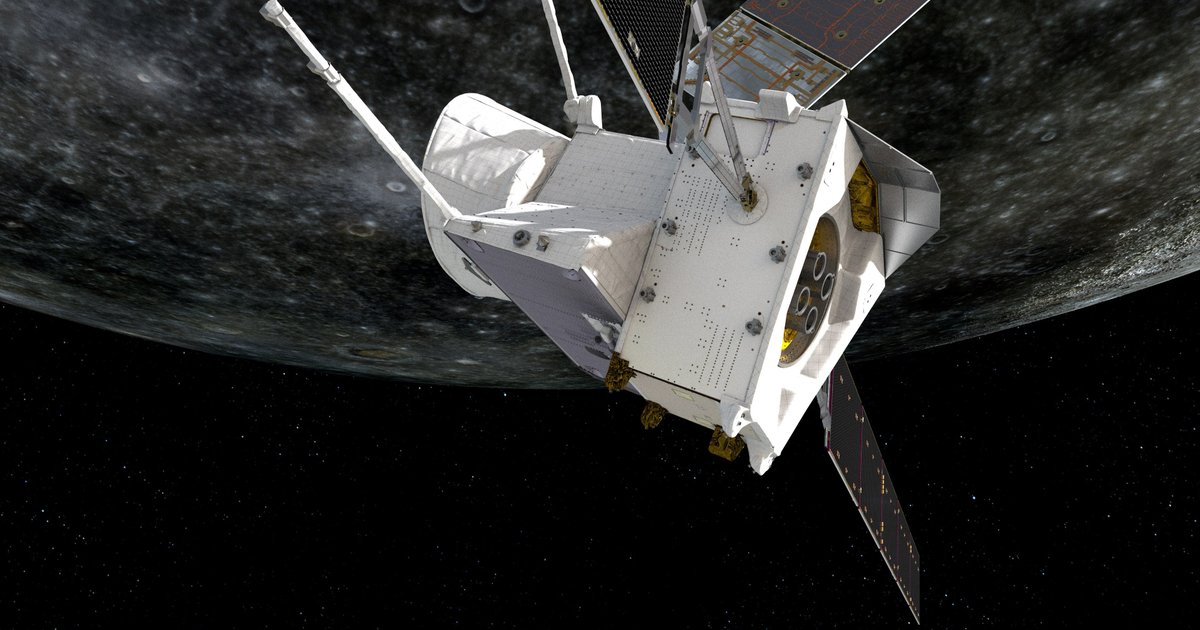
Two Mercury-bound spacecraft separated from their mother ship on Thursday, embarking on the final leg of their nearly decade-long voyage to the solar system's smallest and closest planet to the Sun. The European and Japanese probes, part of the joint BepiColombo mission, will enter Mercury's orbit in November 2026 and split apart in December to conduct comprehensive mapping and scientific studies from different altitudes. Controllers at the European Space Agency's (ESA) German operations centre confirmed the successful separation after an anxious two-hour wait for radio signals from over 200 million kilometres away. Lead project scientist Geraint Jones described the moment as "brilliant."
Key Points
- The BepiColombo spacecraft successfully separated from the transfer module on Thursday, with ESA confirming the operation from Darmstadt, Germany, after a two-hour signal delay from 200 million km away
- The mission, launched in 2018, has travelled over 10 billion km on its energy-saving route and requires 9 planetary flybys to reach Mercury, with the last occurring in January 2025
- As of Thursday, the spacecraft still had 3.3 million km to travel before reaching Mercury orbit, expected in November 2026, with the probes splitting in December
- The mission carries a 2 billion US dollar price tag, with ESA covering the majority of costs; science operations begin next spring studying Mercury's magnetic field, dense interior, and geological features
- Mercury experiences extreme 800°F temperatures yet contains ice at its poles; only NASA's Messenger has previously explored this mysterious planet
Why It Matters
This mission marks humanity's first dual-spacecraft exploration of Mercury, promising to unlock secrets about the solar system's smallest planet that have puzzled scientists since the 1970s. The findings could reshape our understanding of planetary formation and evolution, particularly for rocky planets close to their parent stars. For Hong Kong, the mission demonstrates international scientific cooperation at its finest, with potential for local researchers to contribute to data analysis and inspire future generations of space scientists and engineers.
This mission marks humanity's first dual-spacecraft exploration of Mercury, promising to unlock secrets about the solar system's smallest planet that have puzzled scientists since the 1970s. The findings could reshape our understanding of planetary formation and evolution, particularly for rocky planets close to their parent stars. For Hong Kong, the mission demonstrates international scientific cooperation at its finest, with potential for local researchers to contribute to data analysis and inspire future generations of space scientists and engineers.