Airport Authority Rolls Out Heat Wave Precautions as Record Temperatures Grip Hong Kong
SingTao · 2 SOURCESabout 2 hours ago2 MIN
Summary
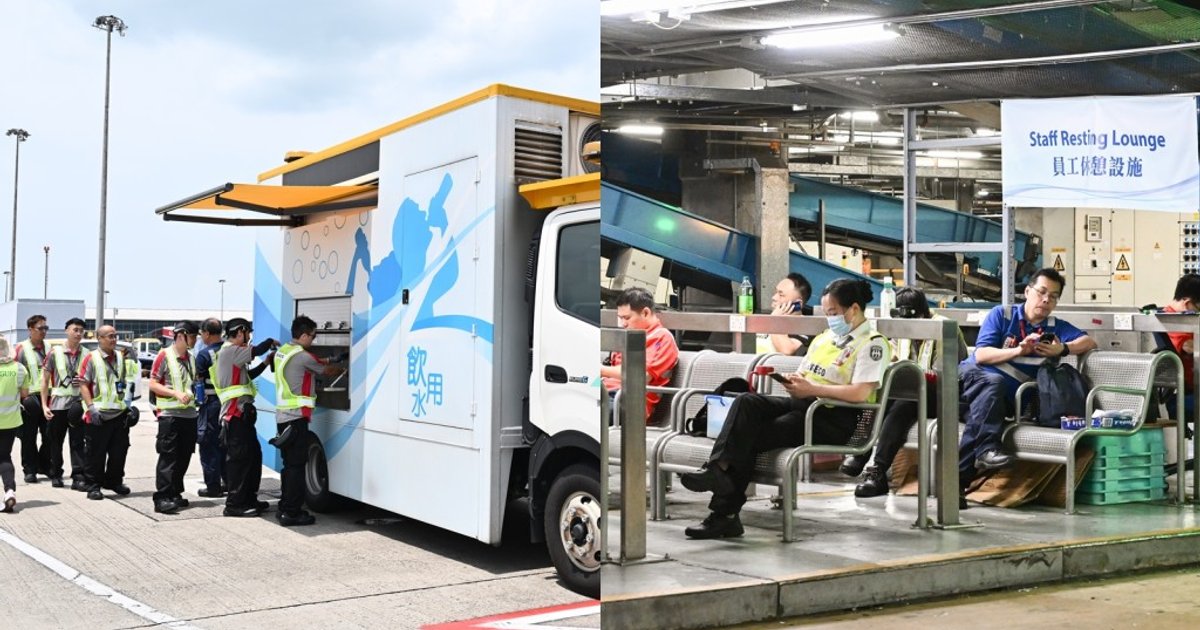
The Airport Authority announced multiple heat prevention measures on July 13 as extreme temperatures continue to affect Hong Kong. The measures include three mobile water trucks operating 24 hours at the apron, five air-conditioned rest rooms, and 49 shaded rest areas with heat-reducing seating. The Authority has also distributed sunscreen, cooling supplies, and ice cream to airport staff while urging vigilance against heat-related illnesses.
Key Points
- The Airport Authority has deployed three mobile water trucks that operate around the clock, shuttling between more than 10 locations across the apron to provide cool drinking water to staff
- Five air-conditioned rest rooms have been established within the restricted area, while 49 shaded rest areas at the apron feature seats made from heat-reducing materials
- The Authority is distributing sunscreen, cooling supplies, and ice cream to airport employees working in high-temperature environments
- Departments and airport business partners have been instructed to closely monitor the Labour Department's Work Heat Stress Warning system
- The Authority emphasized continuous risk assessment for all work processes and ongoing review and optimization of heat prevention measures
Why It Matters
These measures address the occupational safety concerns of thousands of airport workers who face prolonged exposure to extreme heat on the tarmac. As climate change intensifies heat waves in Hong Kong, the Authority's comprehensive approach—combining infrastructure, supplies, and monitoring systems—could serve as a model for other outdoor work environments across the city .
These measures address the occupational safety concerns of thousands of airport workers who face prolonged exposure to extreme heat on the tarmac. As climate change intensifies heat waves in Hong Kong, the Authority's comprehensive approach—combining infrastructure, supplies, and monitoring systems—could serve as a model for other outdoor work environments across the city .