Student Arrested in Fake Officer Scam Targeting Programmer
SingTao · 1 SOURCESabout 2 hours ago2 MIN
Summary
Hong Kong police said a 19-year-old local university student was arrested in Sheung Wan on August 11 after allegedly posing as a mainland “agent investigator” in a phone scam that defrauded a 24-year-old Hong Kong programmer of more than HK$3 million . The victim was first contacted by someone claiming to be from a telecommunications company, then transferred to fraudsters pretending to be mainland public security officers who said his phone number was tied to a money-laundering case in mainland China . Police said the scammers ordered him to keep silent, stay in a hotel in Tseung Kwan O, report his location regularly, and later meet a woman who presented fake documents and had him sign a supposed confidentiality agreement . The arrested student reportedly told police she had previously been caught in a fake officer scam herself and was then recruited remotely to help deceive the male victim .
Key Points
- Tseung Kwan O district police received the report last week from a 24-year-old local man working as a programmer who later realized he had been scammed .
- Fraudsters claimed the victim needed to follow instructions to prove his innocence, forbade him from telling anyone, and directed him to rent a hotel room .
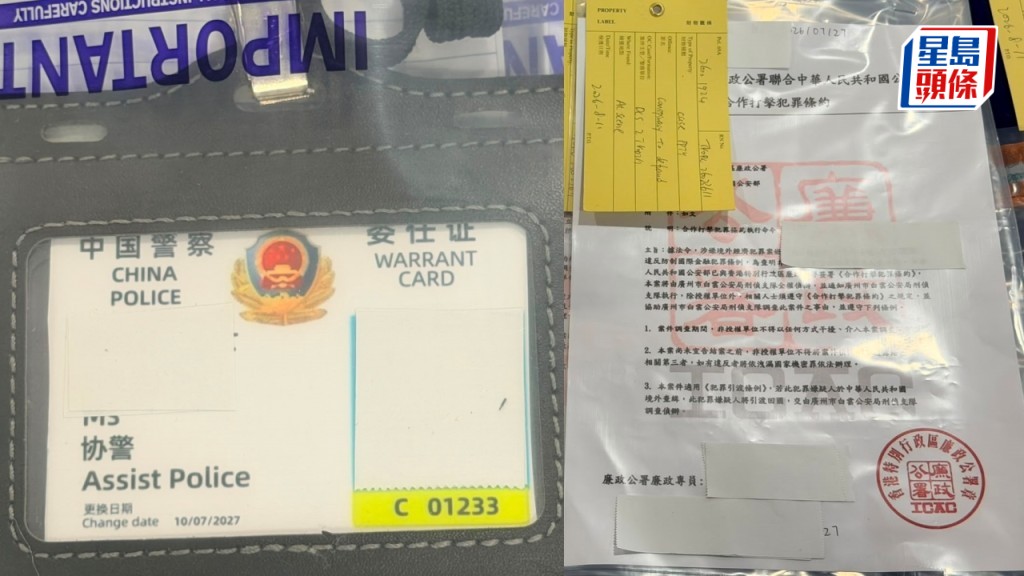
- Outside a hotel in Tseung Kwan O, the victim met a young woman claiming to be an “agent investigator” and signed papers bearing fake mainland police chops .
- The scammers told him to transfer more than HK$3 million into designated bank accounts as funds supposedly required for the investigation .
- Police seized a forged mainland law-enforcement identification card, fake documents, a suspected printer used to make them, and clothing linked to the case .
Why It Matters
The case shows how impersonation scams can isolate victims, pressure them into secrecy, and escalate from phone deception to in-person contact in Hong Kong . It also underlines police warnings that neither Hong Kong nor mainland law-enforcement agencies will demand cash transfers, recruit civilians by phone as investigators, or ask residents to collect money from others .