China's Reusable Rocket Milestone Opens Door for Hong Kong Space Ambitions
SCMP · 1 SOURCESabout 2 hours ago2 MIN
Summary
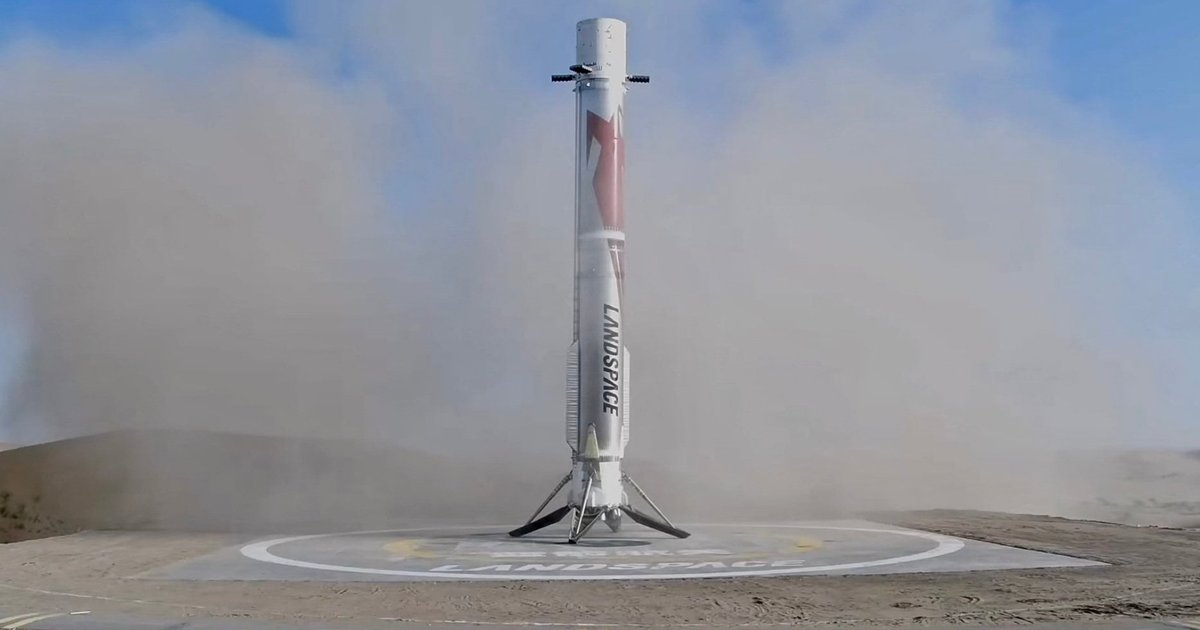
China has achieved its first successful land-based recovery of an orbital-class rocket booster, marking a milestone that narrows the gap with SpaceX's reusable rocket technology. On August 19, LandSpace's Zhuque-3 Y2 launched from the Dongfeng Commercial Space Innovation Test Area, deployed its second stage and payload into orbit, and landed using deployable landing legs at a recovery site in Gansu province . This followed China Aerospace Science and Technology Corporation's sea-based recovery of a Long March-10B rocket's first stage on July 10 — achieved using a net system in less than six weeks earlier . The rapid succession of milestones underscores China's accelerating space ambitions.
Key Points
- LandSpace's Zhuque-3 Y2 successfully landed at a Gansu recovery site on August 19, becoming China's first orbital-class booster to return via land
- The 66-metre rocket weighs approximately 570 tonnes at lift-off and uses nine methane-liquid oxygen engines
- Its stainless-steel structure offers superior heat resistance compared to Falcon 9's aluminium alloy at lower manufacturing costs
- Falcon 9 has reduced launch costs to about US$2,700 per kg, an 85% drop from US$18,500 in the pre-reusable era
- China currently charges between US$8,000 and US$14,000 per kg for commercial launches
Why It Matters
The Zhuque-3 is designed for at least 20 reuses, directly targeting the cost advantage that SpaceX has enjoyed . A 2024 interview with a Zhuque-3 engineer suggested China could develop its own Falcon 9 equivalent within five years and a Starship-class vehicle within two decades — a timeline that, if achieved, could reshape the global launch market . For Hong Kong, this breakthrough signals growing opportunities in satellite manufacturing, space services, and related high-tech industries as China expands its commercial space sector.
The Zhuque-3 is designed for at least 20 reuses, directly targeting the cost advantage that SpaceX has enjoyed . A 2024 interview with a Zhuque-3 engineer suggested China could develop its own Falcon 9 equivalent within five years and a Starship-class vehicle within two decades — a timeline that, if achieved, could reshape the global launch market . For Hong Kong, this breakthrough signals growing opportunities in satellite manufacturing, space services, and related high-tech industries as China expands its commercial space sector.