The Metamorphosis of Mantou: Tracing a Steamed Bread's Migration from Ancient Legend to Dim Sum
Bastillepost · 1 SOURCESabout 4 hours ago2 MIN
Summary
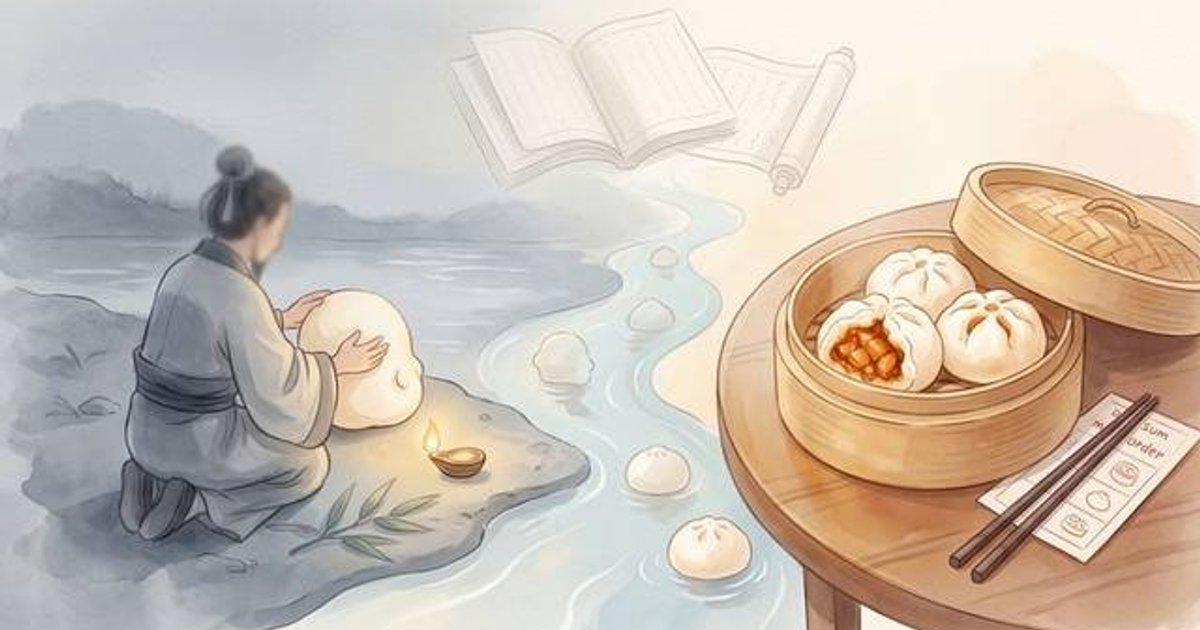
This feature examines the fascinating journey of mantou (steamed bread), tracing its evolution from contested Three Kingdoms origins to becoming a staple of Hong Kong dim sum culture as char siu bao. The article synthesizes historical records, folk legends, and linguistic evidence to construct a narrative of culinary migration across East Asia, arguing that the char siu bao in modern teahouses represents not merely a snack but a living testament to centuries of cultural exchange.
Key Points
- The popular legend attributing mantou's invention to Zhuge Liang during his southern campaigns against Meng Huo lacks any contemporary historical documentation from the Three Kingdoms period, despite its widespread acceptance .
- Earlier textual evidence includes the term "mantou" appearing in Western Jin scholar Shu Ze's "Ode to Bings" and "steamed bing" documented in Eastern Han scholar Cui Shi's "Simin Yueiling," predating Zhuge Liang's era by approximately 200 years .
- The earliest known written record of the Zhuge Liang legend appears in Northern Song scholar Gao Cheng's work "Shiwu Jiyuan" (Records of the Origin of Things), which cites unofficial accounts, and Ming dynasty author Lang Ying's "Seven Corrections on Literary Works" written over a millennium after the Three Kingdoms .
- Scholar Gao Qi'an proposes that "mantou" may derive from foreign linguistic roots, noting Sanskrit terms "mantilo" and "mandira" found in Buddhist scriptures and the modern Indian food "modak," which resembles stuffed buns .
- During the Song dynasty, mantou referred to both stuffed and unstuffed varieties, with Southern Song records from Hangzhou listing numerous varieties including sugar-meat, lamb, crab, and bamboo shoot mantou .
Why It Matters
For Hong Kong readers, the char siu bao represents more than a breakfast staple—it encapsulates the territory's position as a crossroads of culinary traditions. The evolution from Western Region to Central Plains to Jiangnan to Hong Kong mirrors the broader narrative of Cantonese cuisine absorbing and transforming continental innovations into something distinctly local. Understanding this lineage enriches appreciation for how every fluffy char siu bao carries centuries of migration, adaptation, and cultural synthesis within its soft exterior .
For Hong Kong readers, the char siu bao represents more than a breakfast staple—it encapsulates the territory's position as a crossroads of culinary traditions. The evolution from Western Region to Central Plains to Jiangnan to Hong Kong mirrors the broader narrative of Cantonese cuisine absorbing and transforming continental innovations into something distinctly local. Understanding this lineage enriches appreciation for how every fluffy char siu bao carries centuries of migration, adaptation, and cultural synthesis within its soft exterior .