Experts Warn 'Adjustment Period' Cannot Explain Hong Kong Student Suicide Wave
On.cc · 1 SOURCESabout 3 hours ago5 MIN
Summary
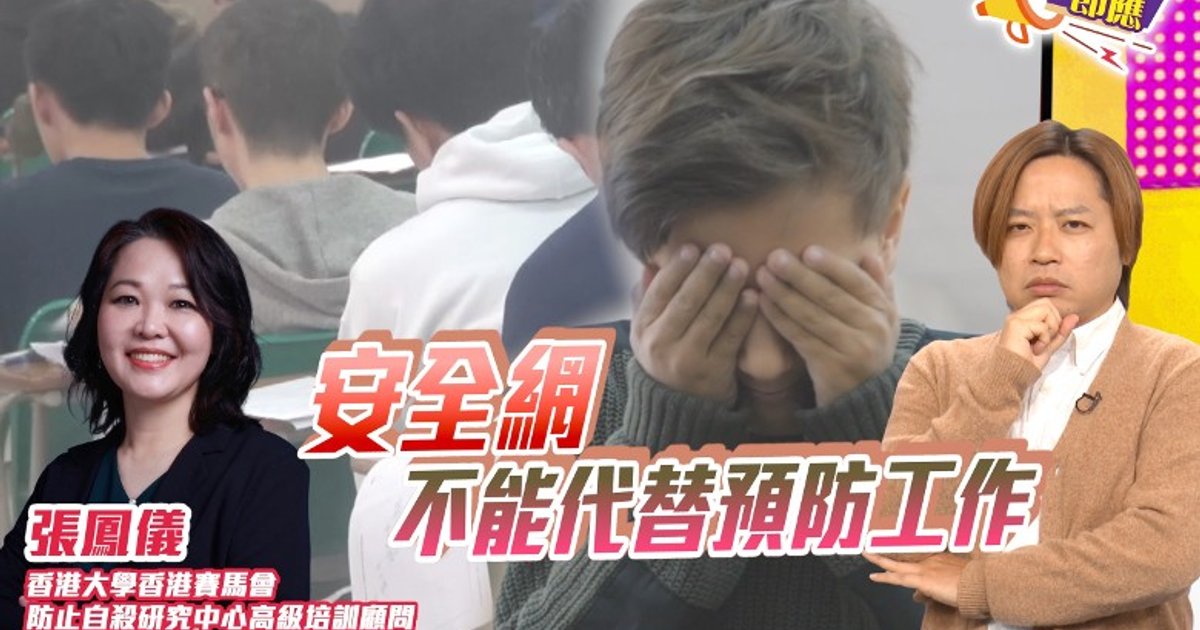
Since school reopened in September 2026, Hong Kong has experienced a series of student suicide tragedies. An official description of the situation as merely an "adjustment period" has drawn sharp criticism from experts, who argue this framing oversimplifies a complex mental health crisis. A specialist has told East Ringing Response that multiple factors contribute to student suicides, and that everyone can serve as a "gatekeeper" to identify warning signs and provide timely intervention.
Key Points
- Since September 2026's school reopening, Hong Kong has recorded multiple student suicide cases, with officials' "adjustment period" explanation widely dismissed as dismissive
- Cheung Fung-yee (張鳳儀), Senior Training Consultant at HKU's Jockey Club Center for Suicide Prevention, states that the adjustment period is merely one stress factor and cannot fully explain suicides
- Research indicates approximately 30% of students who died by suicide had prior mental health diagnosis records, yet many high-risk students never entered the mental health service system
- Warning signs include expressions of self-blame, feeling worthless, sudden behavioral changes, and social media posts mentioning "logging out" or wanting to disappear
- The center urges schools to provide adequate space for students to adjust gradually and calls for comprehensive teacher training in mental health and suicide prevention
Why It Matters
The surge in student suicides highlights systemic gaps in Hong Kong's mental health support infrastructure. With the three-tier response mechanism unable to substitute for preventive work, there is an urgent need to strengthen early identification and intervention capabilities among frontline educators and caregivers. Addressing the cultural stigma around seeking help and reducing excessive academic pressure on students will be critical to reversing this alarming trend.
The surge in student suicides highlights systemic gaps in Hong Kong's mental health support infrastructure. With the three-tier response mechanism unable to substitute for preventive work, there is an urgent need to strengthen early identification and intervention capabilities among frontline educators and caregivers. Addressing the cultural stigma around seeking help and reducing excessive academic pressure on students will be critical to reversing this alarming trend.