Shenzhen Durian Imports Hit Record as Summer Demand Surges
SingTao · 1 SOURCESabout 2 hours ago2 MIN
Summary
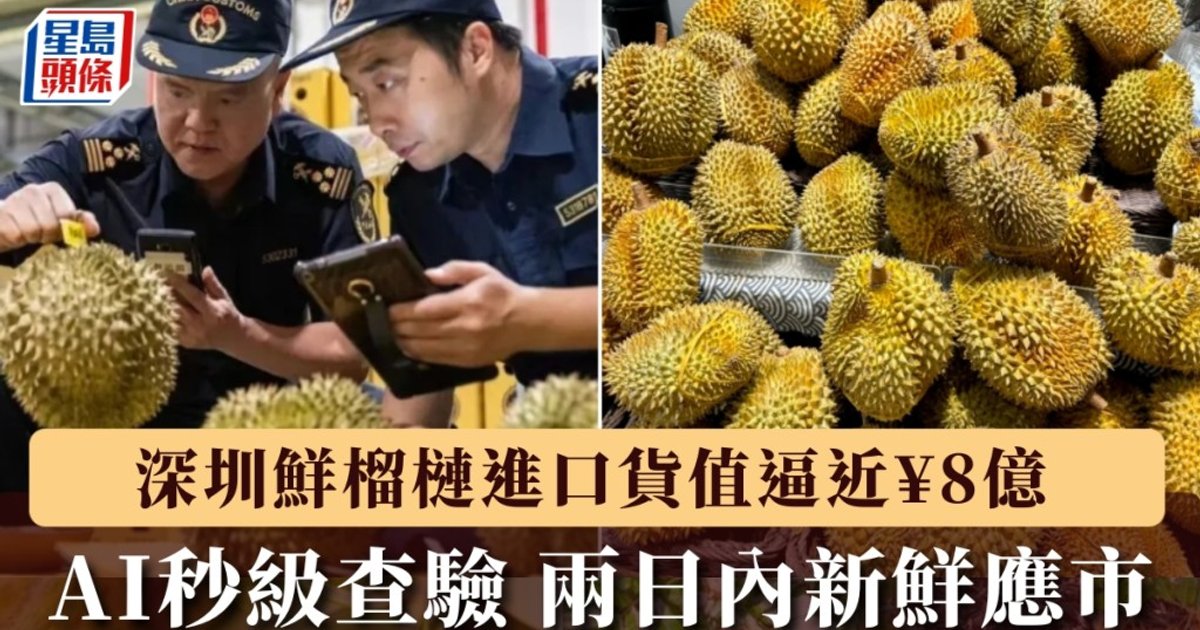
Shenzhen’s summer durian trade has surged to a new high, driven by strong consumer demand and heavy cross-border buying in the Greater Bay Area. Shenzhen Customs said fresh durian imports through the city’s ports totalled 26,200 tonnes from April to July, with a cargo value of about 797 million yuan. The figures were up 40.86% by volume and 22.62% by value from a year earlier, both setting new records. Most of the fruit came from Asia-Pacific Economic Cooperation economies including Thailand and Malaysia, helping keep regional supply plentiful
Key Points
- Shenzhen Customs said fresh durian imports through local ports reached 26,200 tonnes between April and July, worth about 797 million yuan
- Compared with the same period last year, import volume rose 40.86% and cargo value increased 22.62%, both historic highs
- Because durian freshness declines rapidly after harvest, customs now pre-collects shipment and vessel schedules to enable immediate inspection on arrival
- Authorities also deployed intelligent fruit inspection robots and label-recognition algorithms, lifting inspection efficiency by more than 30%
- A dedicated green testing lane lets samples be checked immediately, and importers said most durians are cleared the same day and marketed within two days
Why It Matters
For Hong Kong readers who regularly travel north for food shopping, the record import flow suggests a steadier durian supply in nearby Shenzhen during peak summer demand. At the same time, the medical warning is relevant to cross-border diners because durian is high in sugar and calories, and people with diabetes, kidney impairment, heart failure, obesity or high blood lipids are advised to eat cautiously or avoid it. Older people and those with acute respiratory illness are also advised to eat slowly and sparingly because swallowing difficulty can raise choking risks