Hetao Development Requires Transplanting Four Precious Aquilaria Trees for Eastern Connecting Road
SingTao · 1 SOURCESabout 3 hours ago2 MIN
Summary
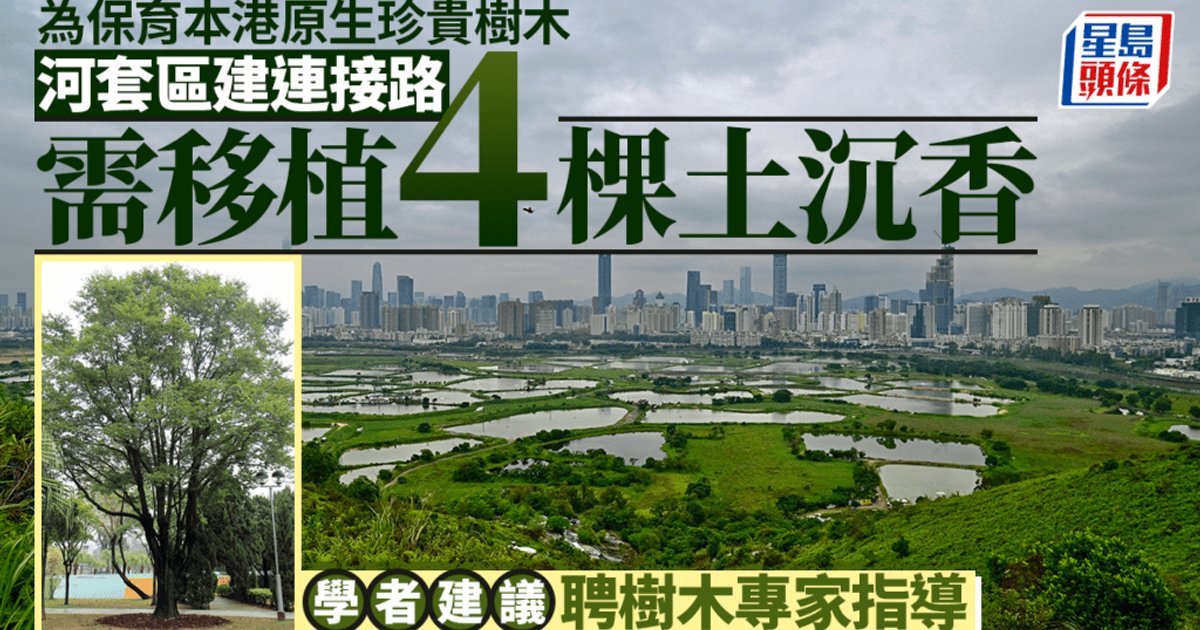
The Hetao Area development is progressing rapidly, with the government proposing to construct a 3-kilometre eastern connecting road linking the Hetao Area East and the Kwu Tung North New Development Area. The project involves preserving some trees on-site and transplanting others, including four rare native Aquilaria sinensis trees growing on a slope, which will be moved to nearby flat terrain to protect Hong Kong's precious native tree species. Professor Chan Chi-yung, Chair Professor of Geography and Environmental Sciences at the Education University of Hong Kong, recommends that contractors engage tree specialists to guide the relocation process and ensure the Aquilaria trees have sufficient space to thrive at their new location.
Key Points
- The proposed dual four-lane eastern connecting road spanning 3 kilometres will connect Hetao Area East with Kwu Tung North New Development Area
- Of approximately 1,000 trees within the project area, 367 must be removed, 618 will be preserved on-site, and 4 Aquilaria sinensis trees require transplantation
- The four Aquilaria sinensis trees range from 4 to 7.5 metres in height, with crown widths of 2 to 6 metres and trunk diameters of 105 to 280 millimetres
- Professor Chan Chi-yung recommends allocating a space of approximately 24 metres by 24 metres to accommodate the four trees arranged in a square formation, given the species can grow to 15 metres tall with a 12-metre crown diameter in South China
- The project includes planting approximately 440 new trees of various species and sizes, along with about 58,900 shrubs to mitigate landscape impacts
- Tsang Jin-chung, Chairman of the North District Council Transportation Committee, supports preserving the valuable Aquilaria sinensis trees
Why It Matters
The preservation of these four Aquilaria sinensis trees reflects the government's commitment to balancing urban development with environmental protection, particularly for a species that has suffered population decline due to illegal logging for valuable agarwood worth up to HK$200,000 per kilogram. As Hong Kong intensifies large-scale infrastructure projects in the Northern Metropolis, the careful transplantation and long-term maintenance of these vulnerable trees will serve as a precedent for integrating ecological considerations into future development planning .
The preservation of these four Aquilaria sinensis trees reflects the government's commitment to balancing urban development with environmental protection, particularly for a species that has suffered population decline due to illegal logging for valuable agarwood worth up to HK$200,000 per kilogram. As Hong Kong intensifies large-scale infrastructure projects in the Northern Metropolis, the careful transplantation and long-term maintenance of these vulnerable trees will serve as a precedent for integrating ecological considerations into future development planning .