Russia Erects WWII Anti-Japan Statue in Khabarovsk, Tokyo Demands Removal
SingTao · 3 SOURCESabout 2 hours ago3 MIN
Summary
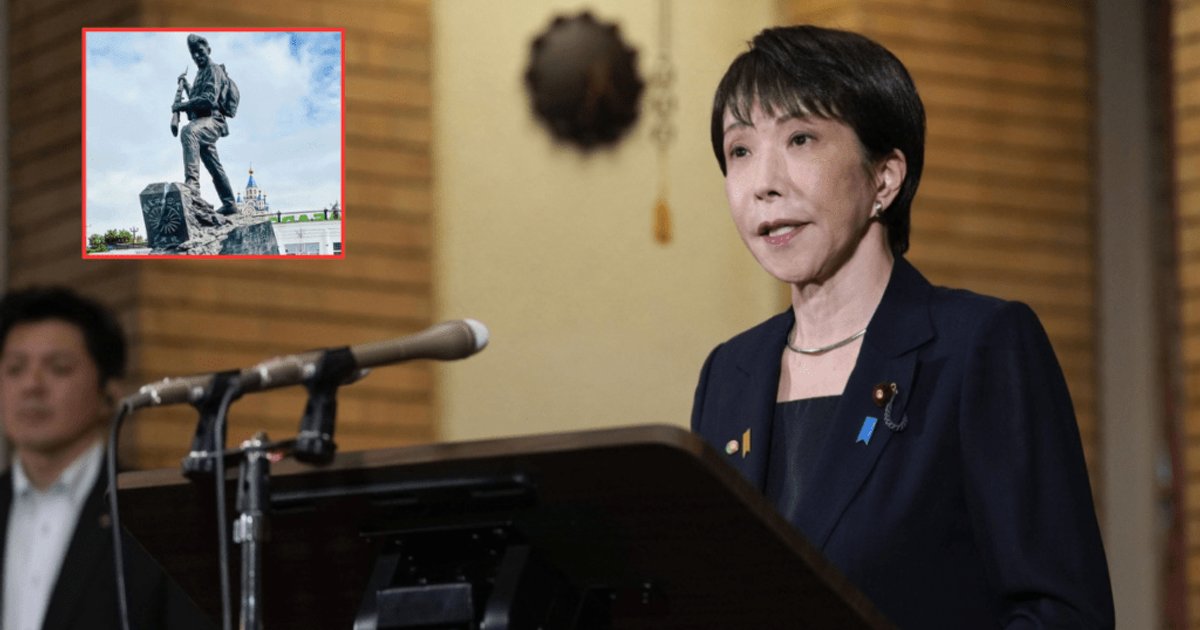
Russia has installed a large bronze memorial in its Far Eastern city of Khabarovsk depicting a Soviet soldier triumphantly destroying a boundary marker bearing Japan's imperial chrysanthemum emblem, sparking sharp diplomatic protest from Tokyo. The 15-meter statue, unveiled on September 4, portrays a Red Army soldier stepping on and smashing a stone pillar inscribed with the chrysanthemum crest, a symbol long associated with the Japanese imperial family and nation. Japanese Prime Minister Takayoshi Takashi took to the social media platform X to demand the monument's immediate removal, posting messages in both Japanese and Russian, while Japanese Foreign Minister Motegi Toshimitsu joined the condemnation calling Russia's actions regrettable. The Kremlin has refused to comply, with Foreign Ministry spokesperson Maria Zakharova dismissing the demand as absurd as asking the sun to cease shining, and urging Japan not to infect other nations with its apparent denial of history. The monument, locally called "Ivan," was constructed by the Russian Military-Historical Society and deliberately mimics boundary markers that once divided the northern and southern parts of Sakhalin Island following the Russo-Japanese War of 1904-1905. Reports indicate that Japan's consulate in Khabarovsk had requested Russia remove the chrysanthemum-marked stone before the unveiling, but this was rebuffed.
Key Points
- The bronze statue, approximately 15 meters tall, was unveiled on September 4 in Khabarovsk, Russia, and depicts a Soviet soldier destroying a marker with Japan's chrysanthemum crest
- Japanese Prime Minister Takayoshi Takashi demanded removal via posts in Japanese and Russian on X, stating the monument severely wounds Japanese national sentiment
- Russian Foreign Ministry spokesperson Maria Zakharova rejected the demand, calling it as absurd as asking the sun to stop shining
- Japanese Foreign Minister Motegi Toshimitsu criticized the move as regrettable and unhelpful for bilateral relations
- Japan raised objections to Russia before the unveiling, requesting removal of the chrysanthemum marker, but was refused
Why It Matters
The statue incident represents a significant deterioration in Japan-Russia relations, which have been strained since Moscow's invasion of Ukraine and Tokyo's alignment with Western sanctions. The memorial's deliberate symbolism—depicting the destruction of Japan's most sacred national symbol—reflects Russia's willingness to provocative historical grievances as a diplomatic tool. For Hong Kong, where both Japan and Russia maintain substantial economic and cultural interests, the escalating tensions between these major powers add another layer of uncertainty to the already complex geopolitical landscape affecting regional stability and trade relations.
The statue incident represents a significant deterioration in Japan-Russia relations, which have been strained since Moscow's invasion of Ukraine and Tokyo's alignment with Western sanctions. The memorial's deliberate symbolism—depicting the destruction of Japan's most sacred national symbol—reflects Russia's willingness to provocative historical grievances as a diplomatic tool. For Hong Kong, where both Japan and Russia maintain substantial economic and cultural interests, the escalating tensions between these major powers add another layer of uncertainty to the already complex geopolitical landscape affecting regional stability and trade relations.