Hong Kong Astronaut Lai Ka-ying Conducts VR, Ultrasound Tests
SingTao · 1 SOURCESabout 3 hours ago2 MIN
Summary
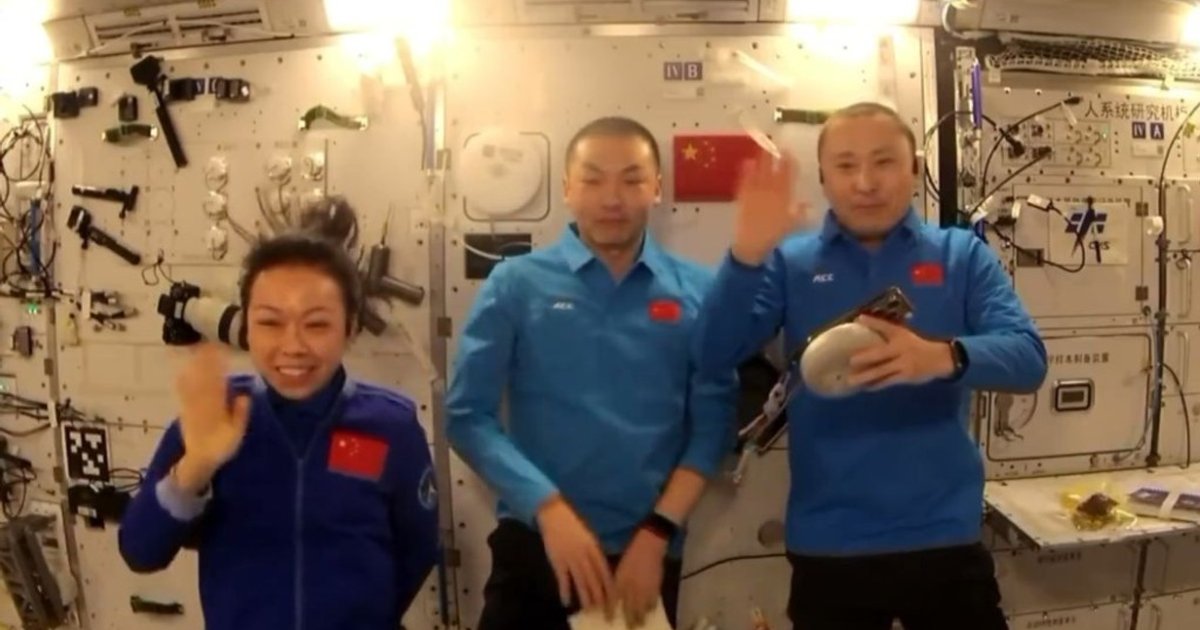
More than 70 days after the Shenzhou-23 crew entered orbit, China’s manned space programme released an update on the latest work and daily life of astronauts Zhu Yangzhu, Zhang Zhiyuan and Hong Kong astronaut Lai Ka-ying aboard the Chinese space station. The footage showed the crew carrying out space medicine experiments, including ultrasound scans of several muscle groups and grip-strength testing to support research on muscle remodelling in microgravity. Lai was also seen wearing a virtual-reality headset for behavioural tests in a multi-person collaborative interface experiment, while the crew interacted with the robot Xiao Hang in touch-based trials. The update also covered treadmill motion studies, fluid-physics sample replacement, equipment maintenance, cabin cleaning and routine abdominal, cardiac and vascular ultrasound health checks
Key Points
- The official social media account “Manned Spaceflight Little Loudspeaker” published the update on August 9, saying the Shenzhou-23 crew had been in orbit for more than 70 days
- Zhu Yangzhu, Zhang Zhiyuan and Lai Ka-ying used an ultrasound diagnostic device to scan the soleus, quadriceps and erector spinae muscles with mutual assistance
- The crew also used force-measurement equipment for grip-strength tests, with the resulting data intended for research on sensitive muscle-group remodelling
- In a collaborative-interface experiment, astronauts wore standalone VR headsets for behavioural testing, including single-person perception tasks and two-person cooperation tasks
- They also conducted touch-interaction tests with robot Xiao Hang, while 3D structured-light cameras recorded treadmill posture data for later ground analysis
Why It Matters
For Hong Kong readers, the appearance of Lai Ka-ying in multiple technical experiments gives a concrete view of a Hong Kong astronaut contributing to frontline space-science work rather than only symbolic representation. The mission update also shows how human health monitoring, robotics and VR-based coordination research are being developed together in orbit, laying groundwork for longer-duration missions and future scientific participation linked to Hong Kong