300-Year Hau Wang Temple Offers Window into Kowloon Walled City Heritage
AM730 · 1 SOURCESabout 2 hours ago6 MIN
Summary
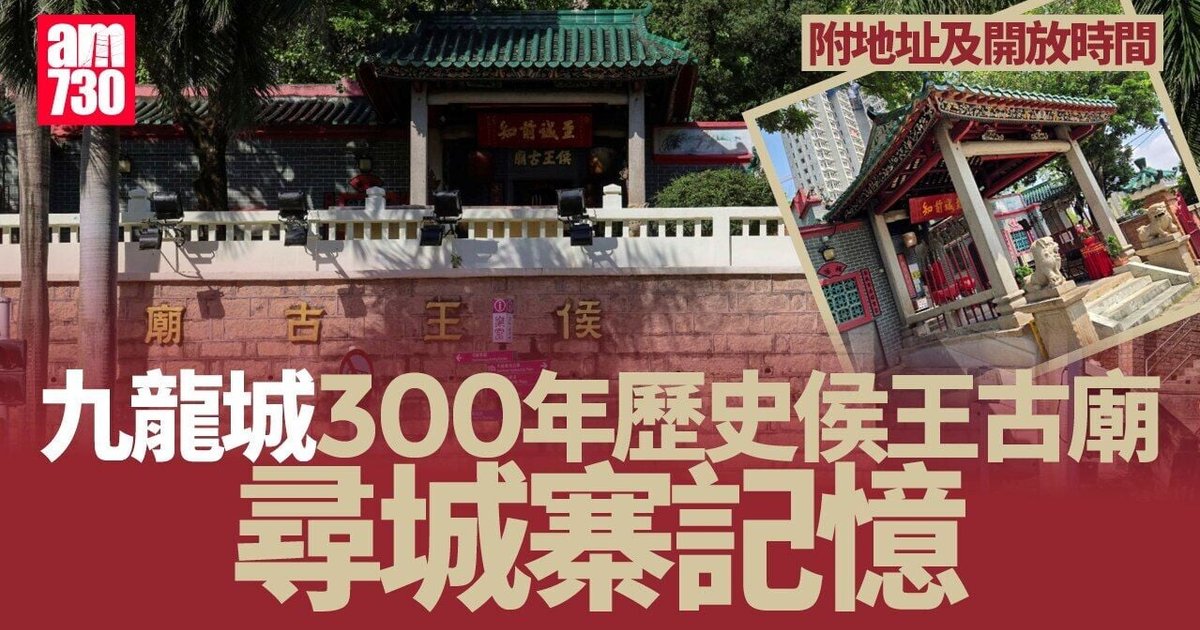
The Hau Wang Temple (侯王古廟) in Kowloon City, with a history approaching 300 years based on a bronze bell cast in 1730 during the Yongzheng reign of the Qing Dynasty, predates the 1847 completion of Kowloon Walled City. Located at the junction of Junction Road and Tung Tau Village Road, the temple was connected to the walled city by a stone-paved path that served as a daily passage for Qing soldiers and residents. As the modern Kai Tak development brings renewed attention to the area's heritage, this temple offers visitors another avenue to explore the historical significance of the former walled city.
Key Points
- The temple's bronze bell, cast in 1730 during the Qing Yongzheng reign, confirms the temple's near-300-year history, making it older than the Kowloon Walled City built in 1847
- A stone-paved "temple road" once directly connected Hau Wang Temple to the walled city, serving as a daily passage for Qing soldiers and local residents before being blocked by present-day Tung Tau Village Road
- The temple features Hong Kong's rare "Five Peaks Facing Heaven" (五嶽朝天式) mountain wall style, with intricate Shiwan pottery sculptures depicting scenes from classic novels like "Sui Tang Fengyun" and "Investiture of the Gods"
- Historical artifacts include an 1888 "Crush Foreign Robbers" plaque dedicated by Dapeng Fortress Deputy Commander He Changqing, an 1847 iron incense burner donated by the first Kowloon Inspector Xu Wenshen, and a "Supreme Sincerity Foresight" plaque from General Lai Zhenbian
- The identity of "Hau Wang" remains disputed among scholars: former Qing historian Chen Bo Tao identifies him as Yang Liangjie, national master Rao Zongyi suggests an ancestor of the Yang family, while folklore points to folk doctor Yang Erbo
Why It Matters
The Hau Wang Temple represents a living link to Hong Kong's Qing Dynasty era, offering residents and visitors an authentic connection to the social and spiritual life that surrounded the infamous Kowloon Walled City before its 1994 demolition . As Hong Kong grapples with balancing urban development and heritage preservation, this 300-year-old temple serves as a cultural anchor that enriches understanding of the city's complex historical layers beyond the legendary "three no-man's land" reputation of the walled city .
The Hau Wang Temple represents a living link to Hong Kong's Qing Dynasty era, offering residents and visitors an authentic connection to the social and spiritual life that surrounded the infamous Kowloon Walled City before its 1994 demolition . As Hong Kong grapples with balancing urban development and heritage preservation, this 300-year-old temple serves as a cultural anchor that enriches understanding of the city's complex historical layers beyond the legendary "three no-man's land" reputation of the walled city .