Japan Meteorology Agency Issues Dramatic False Earthquake Alert, Withdraws 9.9-Magnitude Warning
Crhk · 2 SOURCESabout 4 hours ago3 MIN
Summary
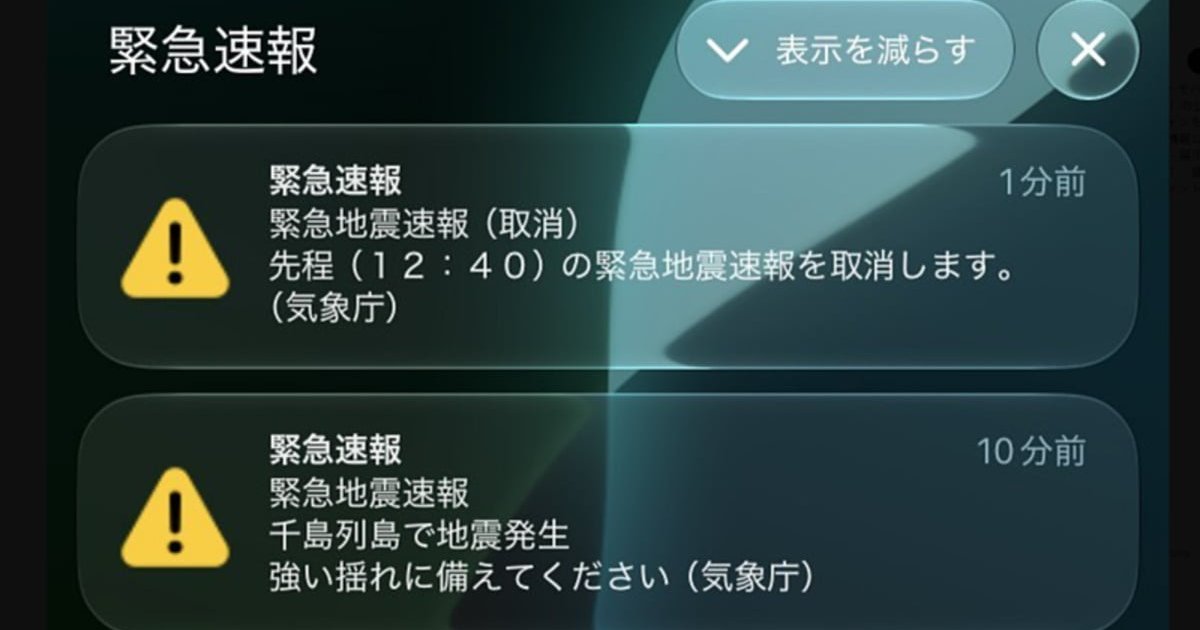
The Japan Meteorological Agency (JMA) issued a dramatic false earthquake warning on October 16, 2026, mistakenly reporting a 9.9-magnitude earthquake near Hokkaido's Kuril Islands when the actual seismic event was a 6.9-magnitude quake off Russia's Kamchatka Peninsula. The erroneous alert, issued at approximately 12:40 PM local time, triggered emergency protocols including the halting of Tokaido Shinkansen bullet trains between Shin-Yokohama and Toyohashi stations . JMA officials apologized twice in emergency press conferences, attributing the error to system miscalculations in both epicenter location and earthquake magnitude that have not yet been fully explained .
Key Points
- A genuine 6.9-magnitude earthquake struck near Russia's Kamchatka Peninsula at around 12:38 PM on October 16, with its epicenter approximately 160 kilometers deep .
- The JMA system erroneously located the epicenter at the Kuril Islands near Hokkaido and dramatically overestimated the magnitude to 9.9 .
- The false alert caused the Tokaido Shinkansen to activate its earthquake prevention system, stopping bidirectional train service between Shin-Yokohama and Toyohashi stations .
- JMA Earthquake and Tsunami Monitoring Division Director Ayaka Ebidani bowed in apology at the first press conference, stating the agency would improve technology to prevent recurrence .
- Earthquake and Volcano Technical Survey Division Director Shigeki Aoki explained at the second conference that the remote epicenter caused positioning errors, with the system marking the wrong location twice .
- JMA has ruled out cyberattack as a cause but cannot exclude the possibility of similar errors occurring again .
- Scientific context: The strongest recorded earthquake in history was the 1960 Chile quake at magnitude 9.5; a 9.9-magnitude quake would release 22 times the energy of the 2011 Great East Japan Earthquake .
Why It Matters
This incident exposes critical vulnerabilities in earthquake early warning systems that governments across the Asia-Pacific region heavily rely upon for disaster preparedness. False alerts that halt transportation infrastructure and trigger mass panic can erode public trust in official warnings, potentially leading to alert fatigue where genuine warnings are ignored. For Hong Kong residents with family, business interests, or travel plans in Japan, the episode underscores the importance of cross-verifying emergency notifications through multiple official channels during seismic events.
This incident exposes critical vulnerabilities in earthquake early warning systems that governments across the Asia-Pacific region heavily rely upon for disaster preparedness. False alerts that halt transportation infrastructure and trigger mass panic can erode public trust in official warnings, potentially leading to alert fatigue where genuine warnings are ignored. For Hong Kong residents with family, business interests, or travel plans in Japan, the episode underscores the importance of cross-verifying emergency notifications through multiple official channels during seismic events.