Yau Tsim Mong Launches Third Community Exploration Program at Kowloon Park
SingTao · 1 SOURCES1 day ago2 MIN
Summary
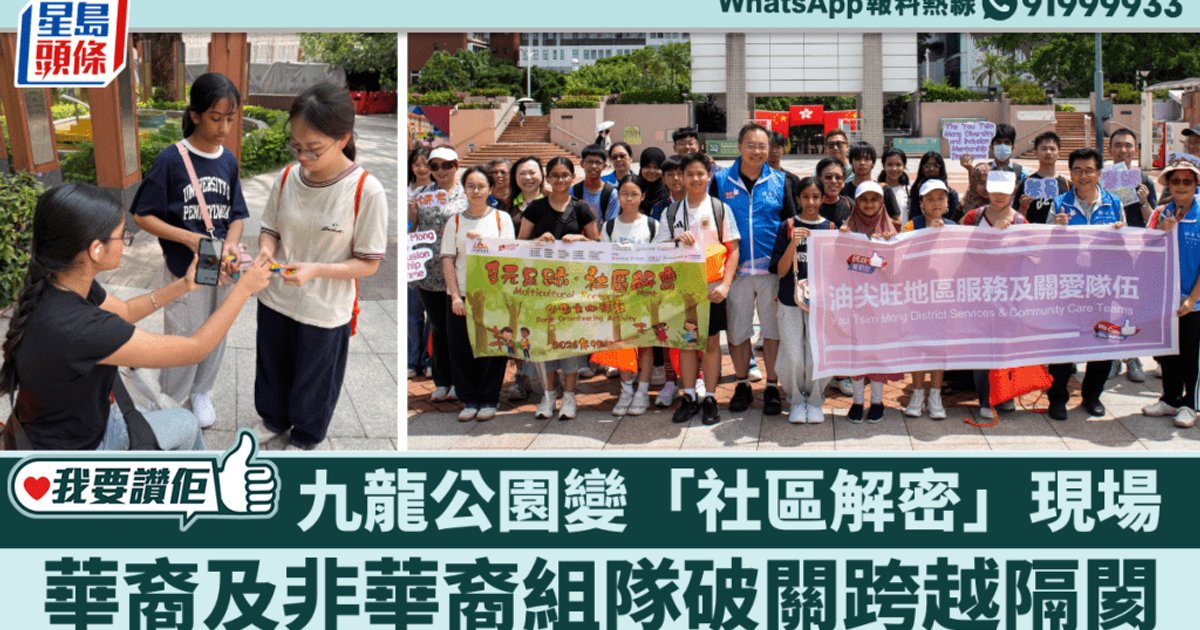
The Yau Tsim Mong Diversity and Inclusion Mentorship Program held its third park orientation event at Kowloon Park in Tsim Sha Tsui on September 13, 2026, drawing 33 Chinese and ethnic minority youth who formed teams to complete community exploration challenges. The activity sought to bridge language and cultural barriers while fostering mutual understanding and community belonging among participants, particularly Hong Kong's 610,000 ethnic minority residents who often face integration challenges .
Key Points
- The event on Sunday afternoon (September 13) at Kowloon Park attracted 33 participants, comprising 9 mentors (8 Chinese and 1 ethnic minority) and 24 students
- Student participants came from disadvantaged families or from South Asian backgrounds including Nepal, Pakistan, India, Bangladesh, Philippines, and Indonesia
- Mentors guided teams through route planning, time management, and collaborative task completion, encouraging communication to resolve challenges
- Special task stations highlighted Yau Tsim Mong district features and cross-cultural communication themes, prompting participants to observe community environment and cultural characteristics
- This marks the third installment of the annual program, which has consistently promoted "diversity, inclusion, mutual growth" as its core philosophy
Why It Matters
The initiative directly addresses social integration challenges in Hong Kong, where ethnic minorities comprise a significant population that often struggles with community belonging. By creating structured environments where Chinese and non-Chinese youth collaborate on equal footing, the program helps dismantle cultural and linguistic barriers that typically impede inclusion. The success of such initiatives could serve as a replicable model for other districts seeking to build more cohesive communities amid Hong Kong's increasingly diverse population .
The initiative directly addresses social integration challenges in Hong Kong, where ethnic minorities comprise a significant population that often struggles with community belonging. By creating structured environments where Chinese and non-Chinese youth collaborate on equal footing, the program helps dismantle cultural and linguistic barriers that typically impede inclusion. The success of such initiatives could serve as a replicable model for other districts seeking to build more cohesive communities amid Hong Kong's increasingly diverse population .