Rosanna Law outlines three-pronged culture strategy
SingTao · 1 SOURCESabout 5 hours ago5 MIN
Summary
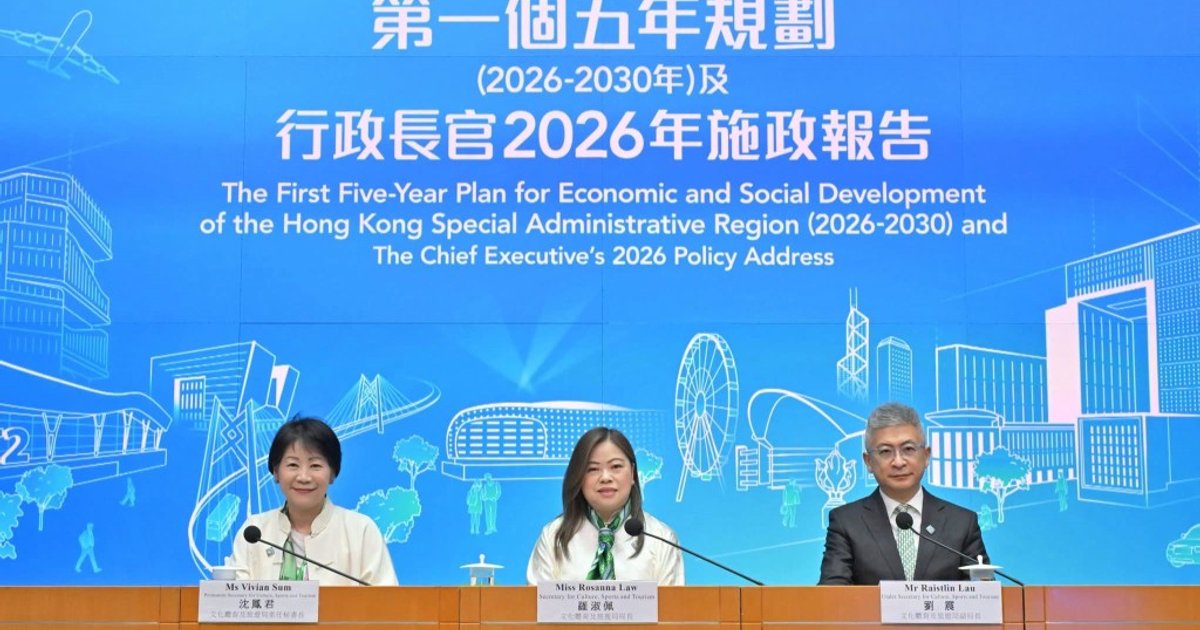
Secretary for Culture, Sports and Tourism Rosanna Law Shuk-pui (羅淑佩) said on September 19 that cultural, sports and tourism measures in Hong Kong’s first five-year plan and the 2026 Policy Address fall into three broad directions: hardware development, institutional reform and telling Hong Kong’s story better. She said the bureau aims to deepen integration across culture, sports and tourism, build Hong Kong into a centre for international cultural exchange, promote fine traditional Chinese culture, expand the scale of the sector and set concrete targets. Law also described the Policy Address as the Chief Executive’s annual report on implementing the five-year plan, while also setting yearly priorities in response to actual conditions
Key Points
- Law said she held a press conference on September 19 with Permanent Secretary for Culture, Sports and Tourism Vivian Sum Fung-kwan (沈鳯君) and Under Secretary Kenneth Lau Chun-kui (劉震) to explain key measures and answer media questions
- On hardware, she identified rebuilding the Victoria Park tennis show court as a priority, saying upgraded facilities could host ATP 500 or higher tournaments and other ball sports events
- Another planned project is a museum in Kwu Tung North to present national development and achievements in history, technology, sports and culture to residents and visitors
- On institutional reform, the bureau will add resources and introduce funding and entry-exit mechanisms linked to performance and artistic standards for arts groups
- Law said the bureau will comprehensively review film-production subsidies under the Film Development Fund and support the Sports Federation and Olympic Committee of Hong Kong, China on sports body governance
Why It Matters
The package links long-term planning with annual policy execution, giving the culture, sports and tourism portfolio a clearer structure for future investment and oversight. For Hong Kong readers, the practical effects could include upgraded venues, changes in how public arts funding is allocated, and a stronger push to convert major events into repeat tourism and broader city branding