China Closes 30,000 Primary Schools in Five Years as Idle Campuses Become Elder Care Centers
On.cc · 2 SOURCES1 day ago3 MIN
Summary
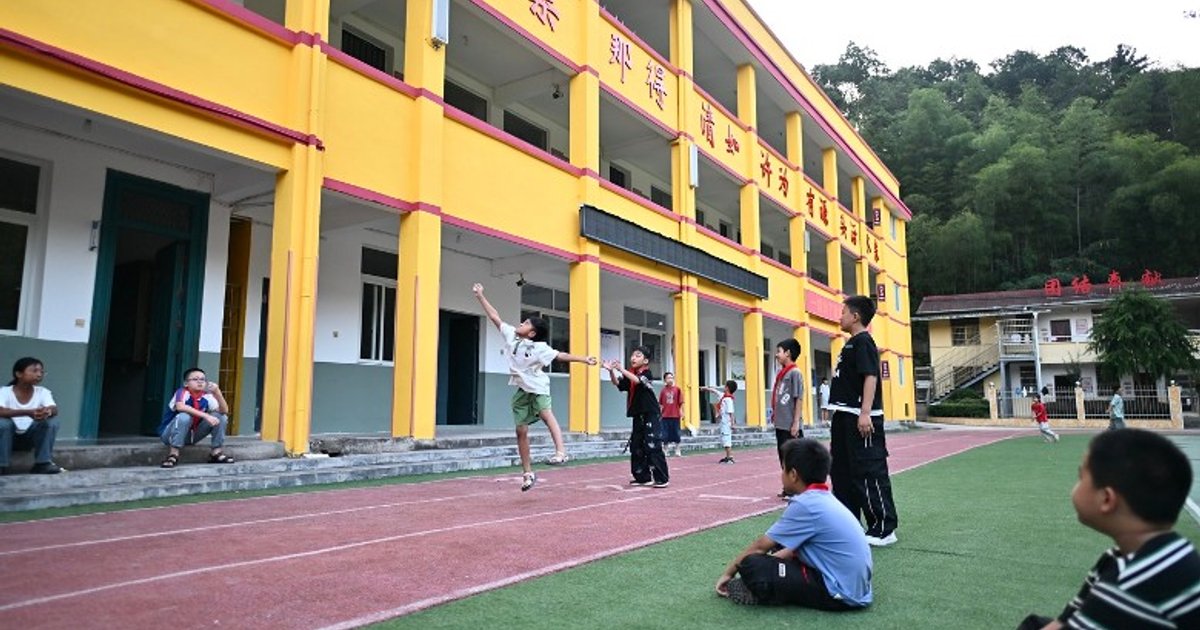
China has seen nearly 30,000 primary schools disappear in just five years as rural-to-urban migration accelerates and the country's population structure shifts dramatically. With the national primary school student population dropping by 4.06 million year-on-year to 101 million, many rural public schools have been shuttered due to declining enrollment and administrative restructuring. Multiple provinces are now racing to repurpose these abandoned campuses, with a significant portion being converted into nursing homes, senior activity centers, and communal dining halls for elderly residents. The phenomenon underscores China's dual challenge of managing population decline while addressing the needs of a rapidly aging society.
Key Points
- As of last year, China had 128,300 regular primary schools, marking a reduction of 29,700 schools compared to 2020 .
- The number of primary school students nationwide fell to 101 million, representing a year-on-year decrease of 4.06 million .
- In Junzijian Village, Shanyang County, Shaanxi Province, an idle village primary school has been converted into a Filial Piety and Love Elderly Care Home .
- Fujian's Nanping City had 601 idle school buildings as of autumn last year; of these, 20 have been repurposed for public welfare such as nursing homes and senior dining halls, 17 converted into factories, and 4 adapted for cultural tourism projects .
- Hunan Province's Department of Education and eight other departments jointly issued a notice in May this year, proposing a three-year plan to systematically handle the revitalization of idle school campuses .
- Ding Changfa, Associate Professor of Economics at Xiamen University, attributed the trend to significantly improved urban educational resources attracting rural families, with many economically capable parents choosing to send their children to urban schools .
Why It Matters
The closure of nearly 30,000 primary schools in five years represents one of the largest systematic contractions of educational infrastructure in modern Chinese history. For Hong Kong, which faces similar aging population pressures and occasional school closure discussions, China's experience demonstrates both the social challenges of demographic decline and potential adaptive strategies. The repurposing of idle school facilities into elder care infrastructure offers a template for community-responsive urban planning that Hong Kong policymakers may find increasingly relevant as the city grapples with its own aging society and changing educational needs.
The closure of nearly 30,000 primary schools in five years represents one of the largest systematic contractions of educational infrastructure in modern Chinese history. For Hong Kong, which faces similar aging population pressures and occasional school closure discussions, China's experience demonstrates both the social challenges of demographic decline and potential adaptive strategies. The repurposing of idle school facilities into elder care infrastructure offers a template for community-responsive urban planning that Hong Kong policymakers may find increasingly relevant as the city grapples with its own aging society and changing educational needs.