China-Japan Student Exchange Relocates to Hong Kong, Skips Mainland
On.cc · 1 SOURCESabout 2 hours ago2 MIN
Summary
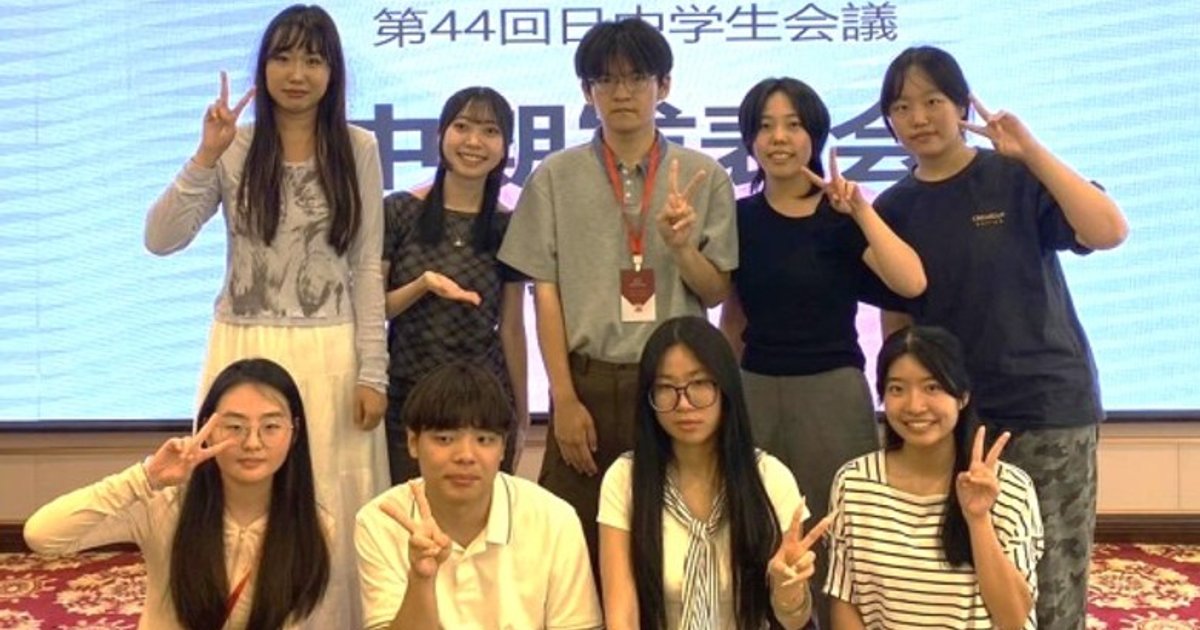
The 45th China-Japan Student Conference, a grassroots student exchange program dating back to 1986, has relocated its activities to Hong Kong after abandoning plans to visit mainland China amid deteriorating bilateral relations . The opening ceremony was held at the Japanese Consulate General in Hong Kong, with the program including visits to Japanese enterprises and discussions on China-Japan relations .
Key Points
- The exchange attracted 30 Japanese participants, the full quota, but only 8 Chinese participants, highlighting the impact of political tensions on people-to-people exchanges .
- The program, founded in 1986, was originally designed to foster dialogue independent of national interests, with students from both countries raising funds and planning activities independently .
- Since 2022, the format had shifted to consecutive visits to both China and Japan, but university professors serving as advisors flagged risks to mainland travel this year .
- Okada Kokomi, a third-year student at Sophia University and executive chair of the conference, delivered opening remarks acknowledging the event had nearly been cancelled, expressing hope that grassroots exchanges could improve bilateral relations .
- Participants will travel to Tokyo on Thursday (June 13) to present their findings at a reporting session, concluding this year's abbreviated program .
Why It Matters
Hong Kong's role as a neutral venue for sensitive international exchanges may expand as geopolitical friction makes direct mainland access problematic for certain programs. The city's unique position under "one country, two systems" could attract similar educational and cultural initiatives seeking to maintain China-facing engagement without crossing politically sensitive boundaries .
Hong Kong's role as a neutral venue for sensitive international exchanges may expand as geopolitical friction makes direct mainland access problematic for certain programs. The city's unique position under "one country, two systems" could attract similar educational and cultural initiatives seeking to maintain China-facing engagement without crossing politically sensitive boundaries .