Election Committee voting begins in 31 contested subsectors
SingTao · 13 SOURCES33 minutes ago2 MIN
Summary
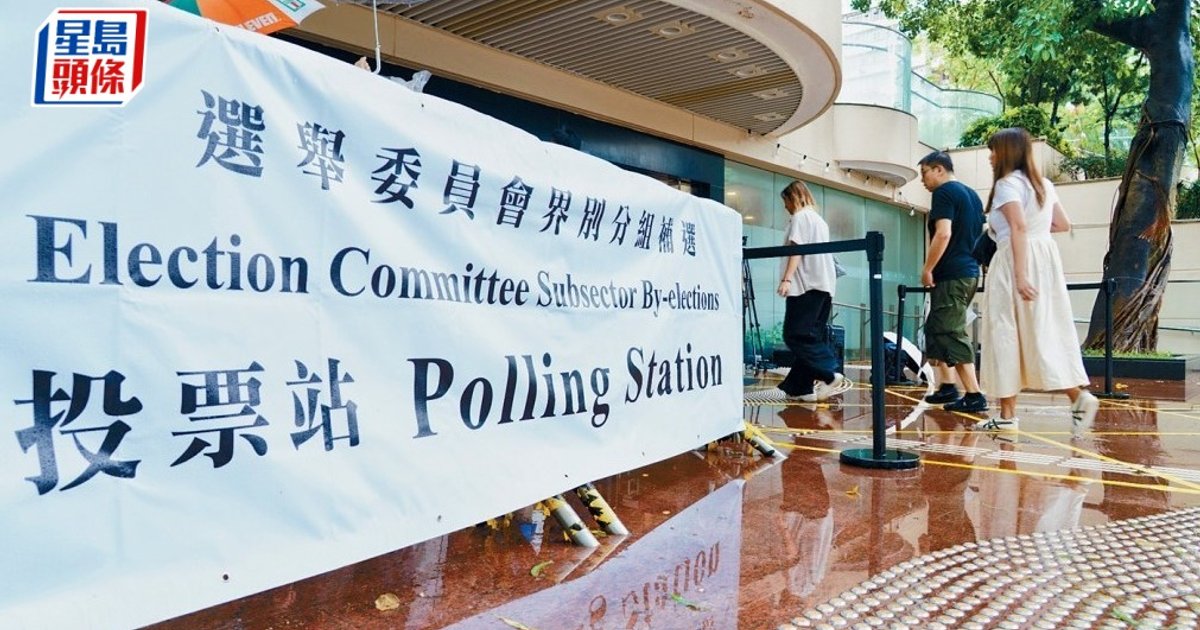
Voting is taking place on Sunday in Hong Kong’s Election Committee subsector ordinary election, with 31 subsectors requiring contests and 856 candidates competing for 723 seats. About 5,700 eligible voters or authorized representatives may vote from 9am to 6pm, after which all ballot boxes will be sent to the central counting station at the Hong Kong Convention and Exhibition Centre. The social welfare subsector is the most competitive, with 25 candidates vying for 15 seats, while the medical and health services subsector has 23 candidates for 15 elected seats. Compared with the previous term, far fewer subsectors are uncontested, and officials have presented the election as featuring broader competition under the revamped system.
Key Points
- The nomination period received 1,115 candidate nominations and 40 nomination forms from designated bodies, with 856 candidates ultimately contesting 723 seats in 31 subsectors
- The Election Committee has 1,500 members split equally among five sectors, and elected winners will join 259 returned unopposed and 518 ex officio or nominated members.
- Five ordinary polling stations are open from 9am to 6pm, while sources differ on dedicated stations, with one report saying one at Happy Valley Police Station and another saying two dedicated stations.
- Ballot papers are issued through the Electronic Poll Register system, voters must present the original of a valid Hong Kong identity card, and ballot checking machines are available.
- Chief Executive John Lee Ka-chiu visited the Harbour Road Sports Centre polling station on Saturday with Secretary Erick Tsang Kwok-wai and Electoral Affairs Commission chairman David Lok Kai-hong.
Why It Matters
The Election Committee nominates and elects the chief executive and also nominates Legislative Council candidates while returning 40 lawmakers through the Election Committee constituency. With more contested subsectors than in the last cycle, the outcome will shape which organized interests and professional groups hold influence inside Hong Kong’s post-overhaul electoral structure.