CCTV Exposes Fake Whole Wheat Bread Made with Caramel Coloring
SingTao · 3 SOURCESabout 2 hours ago2 MIN
Summary
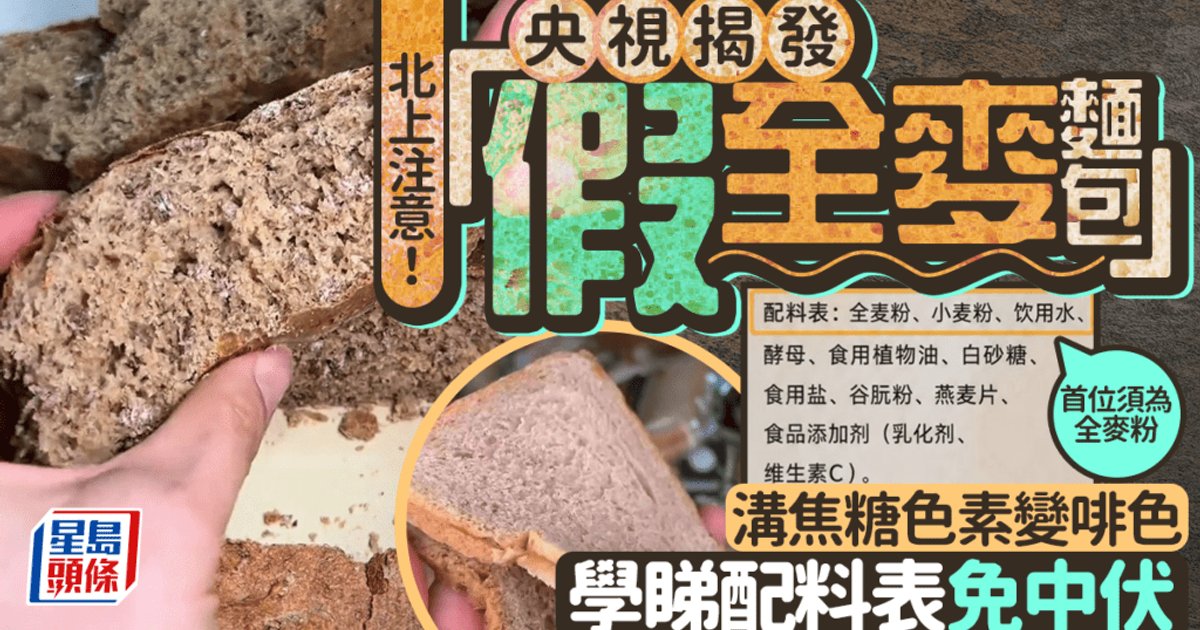
CCTV has exposed widespread fraud in China's whole wheat bread market, revealing that numerous products labeled as healthy whole wheat are actually made primarily from refined wheat flour, with only token amounts of bran added and caramel coloring used to create the appealing dark brown appearance. The investigation, conducted by the Chinese Academy of Agricultural Sciences Institute of Crop Sciences, found that manufacturers are exploiting ambiguous naming conventions like "wheat-flavored bread" and "whole grain bread" to mislead health-conscious consumers. The exposure has sparked heated online debate, with diabetes patients particularly alarmed as consuming these fake whole wheat products can cause dangerous blood sugar spikes. Experts are urging consumers to read ingredient labels carefully and verify that whole grain content meets the mandatory 25% minimum standard before purchasing.
Key Points
- CCTV investigation revealed that many "whole wheat" breads have refined wheat flour as the primary ingredient, with only minimal bran added and caramel coloring for appearance
- Whole grains must retain the complete bran, germ, and endosperm, while whole wheat is only one specific type of whole grain
- According to China's whole grain industry standard, whole grain products must contain at least 25% whole grain content and display clear labels such as "100% whole grain product"
- Refined grains lose 60-80% of dietary fiber, B vitamins, and unsaturated fatty acids during processing, offering minimal nutritional value
- Experts recommend checking ingredient lists: if whole wheat or whole grain appears near the end or below 25%, the product is merely a "flavored grain food," not a true whole grain product
Why It Matters
This fraud directly impacts Hong Kong residents who frequently travel north and purchase bread products there, potentially undermining their dietary management efforts. For the growing number of diabetics and weight-conscious individuals in Hong Kong, consuming these deceptive products instead of genuine whole wheat could worsen health outcomes rather than improve them. The case also highlights broader concerns about food labeling regulation effectiveness in the Greater Bay Area, urging authorities to strengthen enforcement to protect consumer health .
This fraud directly impacts Hong Kong residents who frequently travel north and purchase bread products there, potentially undermining their dietary management efforts. For the growing number of diabetics and weight-conscious individuals in Hong Kong, consuming these deceptive products instead of genuine whole wheat could worsen health outcomes rather than improve them. The case also highlights broader concerns about food labeling regulation effectiveness in the Greater Bay Area, urging authorities to strengthen enforcement to protect consumer health .