Customs, marine police seize 20 million illicit cigarettes
HK01 · 3 SOURCESabout 2 hours ago2 MIN
Summary
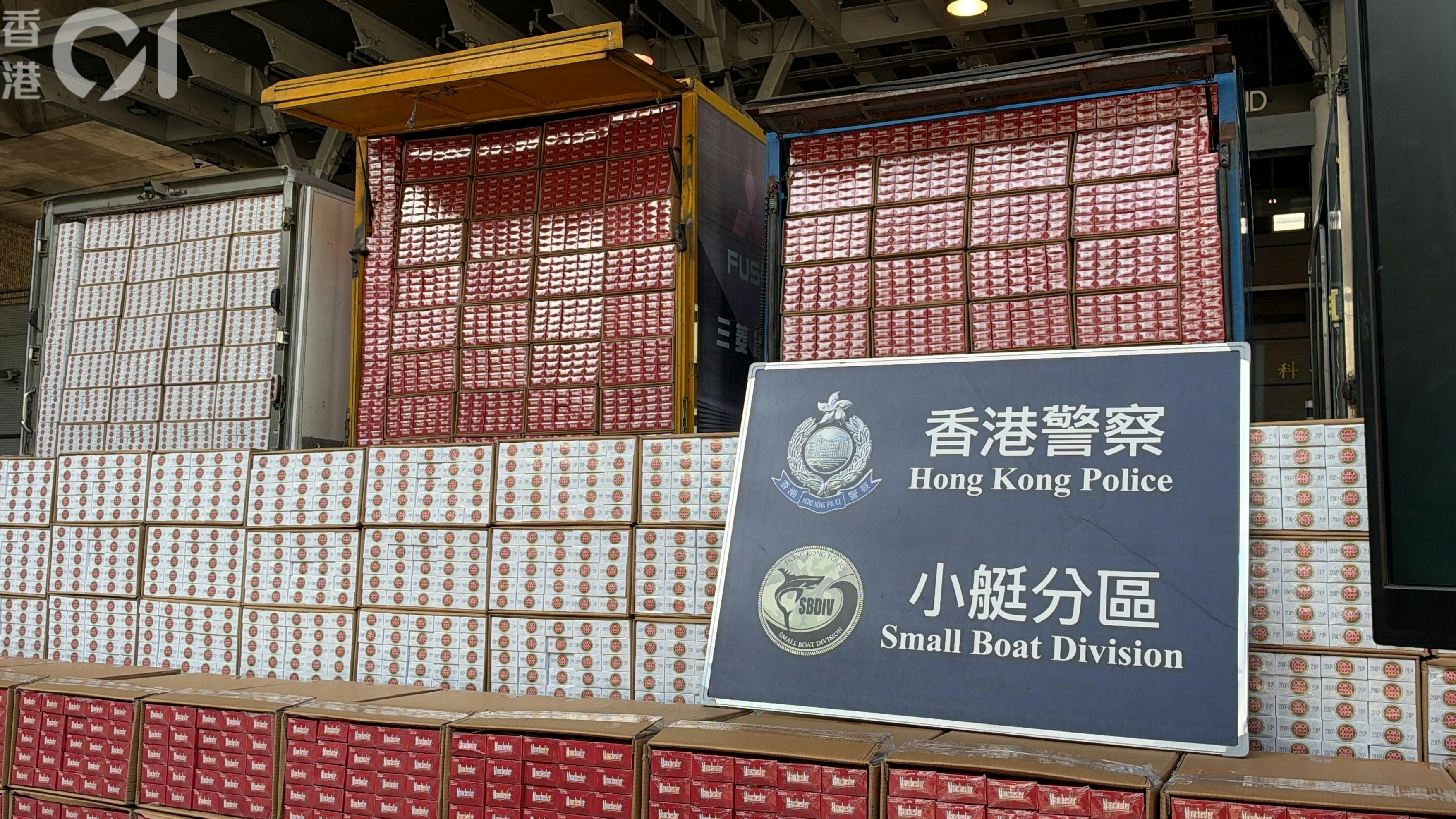
Hong Kong Customs and the Marine Police said they dismantled nine illicit cigarette cases during a joint anti-smuggling operation conducted from October 13 to 27. Across the operation, officers arrested seven men and seized about 20.39 million suspected illicit cigarettes, five high-powered speedboats and four vehicles, with the haul estimated to be worth HK$95 million in total. Authorities said the syndicates moved cigarettes across the boundary by sea, unloaded them at remote coastal points, then shifted them by truck to secluded parking areas or storage sites for temporary holding, repacking and distribution. Customs added that some brands were uncommon in Hong Kong, raising suspicions that part of the stock was intended for onward “secondary smuggling” to overseas markets with higher tobacco duties
Key Points
- The Marine Police and Customs carried out the joint anti-illicit-cigarette operation between October 13 and 27, targeting the full chain from sea smuggling to land transport, storage and distribution.
- The Marine Police Regional Task Force cracked six cases in Sai Kung, Tseung Kwan O, Yung Shue Au, Lung Kwu Chau and Chow Kwu Island.
- In those six cases, officers seized about 14.82 million duty-not-paid cigarettes, five speedboats and two light goods vehicles, and arrested five mainland Chinese men.
- On the night of October 15, officers intercepted a suspicious truck in Kwai Chung and found about 2 million suspected illicit cigarettes, arresting a 37-year-old local man.
- Following intelligence-sharing, Customs raided two storage and distribution warehouses in San Tin on October 26, seizing about 3.47 million cigarettes and arresting a 43-year-old Chinese male worker
Why It Matters
The case shows how enforcement agencies are trying to disrupt smuggling at multiple stages rather than only intercepting cargo at sea. It also indicates that syndicates are adapting by using remote transfer points, smaller rural structures and rapid repacking methods, which can complicate detection and prolong investigations