Hip Shing Hong Dynasty Built From Sesame to Property
SingTao · 1 SOURCESabout 9 hours ago4 MIN
Summary
Hip Shing Hong’s founding Fang family has been profiled as a rare Hong Kong business dynasty that has carried its wealth and operations into a fifth generation. Its rise began with a sesame factory in 1927, expanded into spice trading and then moved decisively into property development from 1958 onward
Key Points
- In 1927, first-generation founder Fang Zhao-yi (方肇彝) opened Yide Sesame Factory in Shau Kei Wan, laying the family’s first financial foundation through manufacturing
- In 1948, second-generation leader Fang Shu-chuen (方樹泉) founded Hip Shing Hong in Central and built a re-export spice business, becoming known as Hong Kong’s “king of cinnamon.”
- As Hong Kong’s post-war population surged, Fang Shu-chuen shifted from spices into real estate, launching the family’s first residential project, Kam Wah Building, in 1958
- Third-generation figure Fang Runhua (方潤華) led Hip Shing Hong through nearly 100 projects, took the company public in 1972, and oversaw its privatization in 1989
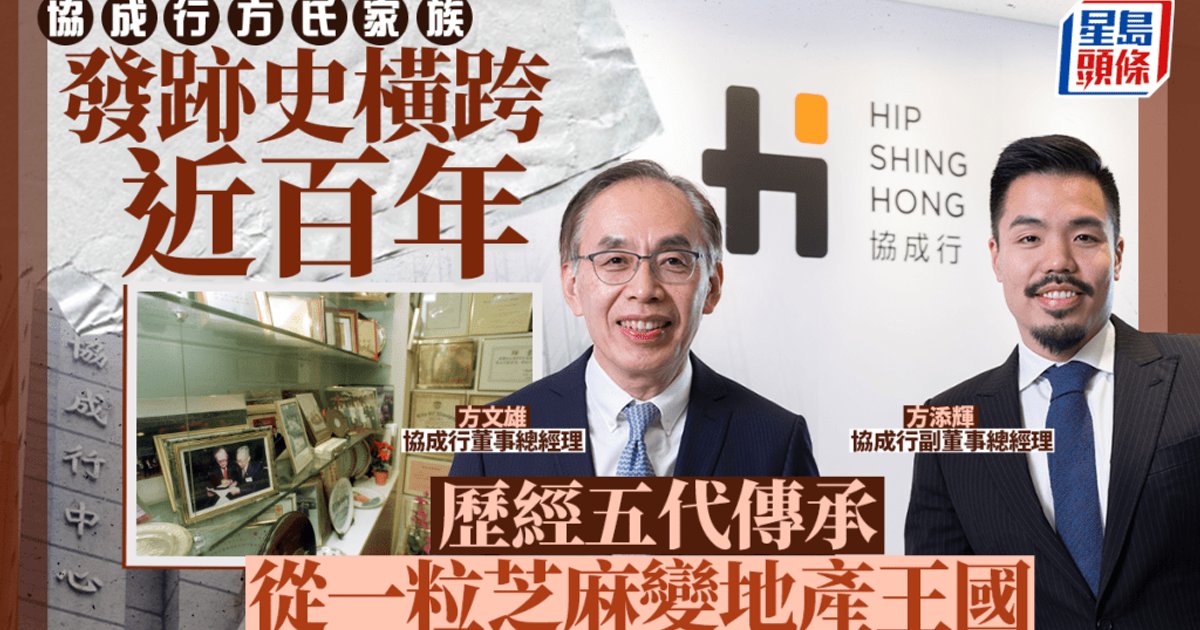
- The succession later passed to younger son Fang Man-hung (方文雄), who became managing director in 1993, while fifth-generation grandson Fang Tim-fai (方添輝) joined in 2012 and is now deputy managing director
Why It Matters
The Fang family’s history offers a case study in how old Hong Kong family businesses used steady cash flow, conservative capital management and opportunistic buying during downturns to preserve control across generations. It also shows how philanthropy was built into the family’s operating philosophy, with Fang Runhua setting a rule to donate at least 10% of annual profits