Lee pledges accountability after Wang Fu Court fire inquiry
HK01 · 1 SOURCESabout 2 hours ago2 MIN
Summary
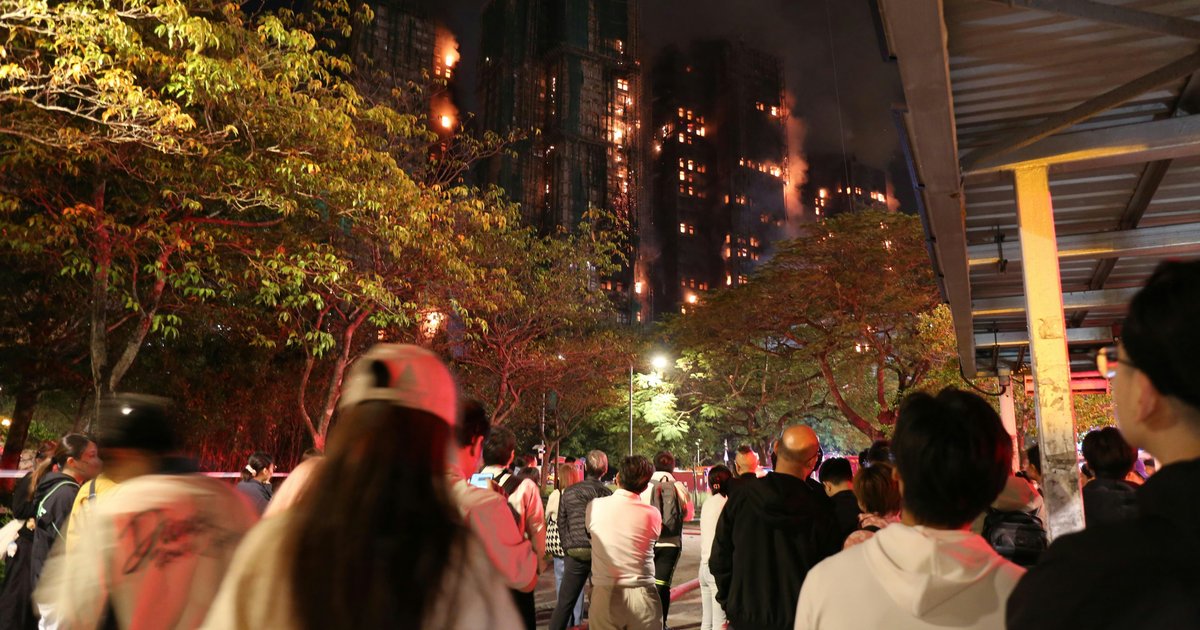
Chief Executive John Lee Ka-chiu has responded to questions about accountability for the Wang Fu Court fire tragedy with a 12-character pledge: "systemic reform, legal reform, accountability." The independent commission investigating the blaze, which claimed 168 lives in Tai Po, is working through extensive written evidence and is expected to submit its final report to the Chief Executive in late October .
Key Points
- Lee made the remarks after attending the first district consultation session for the five-year plan and policy address in Kowloon Tong, where he was questioned by HK01 reporters .
- The Chief Executive stated the government fully trusts and will support the independent commission's work, acknowledging the complexity and pressure of its task .
- Regarding building inspection reports, Lee said the Housing Bureau is following up and has already provided an explanation .
- On the Wang Fu Court acquisition, Lee announced 91.9% of residents have signed acceptance letters and 65.7% have completed sales contracts, with formal deed transfers proceeding smoothly .
- Lee said compulsory acquisition using the Lands Resumption Ordinance would be a "last-stage decision," preferring voluntary acceptance of the government's purchase offer .
Why It Matters
The Chief Executive's emphasis on both administrative and political accountability signals potential structural changes to Hong Kong's fire safety and public housing governance. The acquisition progress shows most residents are cooperating, but the possibility of compulsory land resumption raises questions about property rights and government power in post-disaster recovery .
The Chief Executive's emphasis on both administrative and political accountability signals potential structural changes to Hong Kong's fire safety and public housing governance. The acquisition progress shows most residents are cooperating, but the possibility of compulsory land resumption raises questions about property rights and government power in post-disaster recovery .