Study Warns Toilet Flushing Creates Germ-Laden Aerosols Rising 163cm
AM730 · 2 SOURCESabout 2 hours ago2 MIN
Summary
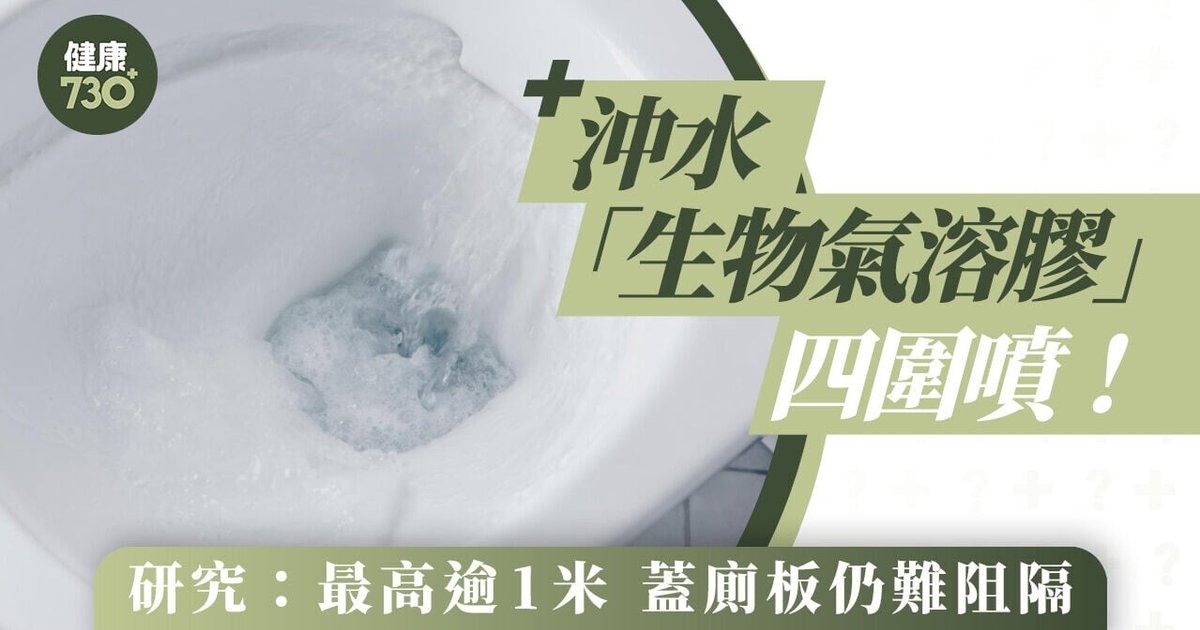
Research from Australia's Flinders University has found that flushing toilets generates bioaerosols capable of rising to 1.63 meters in height and remaining suspended in the air for more than 20 seconds, potentially exposing users to harmful pathogens. A systematic review published in Science of the Total Environment analyzed 22 previous studies on toilet-generated aerosols and bioaerosols . The research team discovered that microorganisms from fecal matter and toilet water can become airborne through the turbulent water flow during flushing, with particles detected at heights equivalent to adult breathing level . While closing the toilet lid before flushing is recommended as a preventive measure, researchers caution that it cannot fully prevent the escape of smaller particles through gaps between the lid and seat .
Key Points
- Flinders University researchers analyzed 22 studies, finding toilet flushing releases bioaerosols reaching 1.5 meters (163cm) in just 8 seconds
- These particles can stay airborne for over 20 seconds, with sizes ranging from 0.3 to 10 micrometers, potentially deep into lungs
- Pathogens identified include E. coli, Salmonella, C. difficile, Legionella, influenza, and Norovirus
- Microbial concentration increases 10-fold in water leads to 2.6-fold increase in airborne bioaerosols
- Closing the toilet lid reduces but does not eliminate aerosol escape through gaps between lid, seat and toilet
Why It Matters
For Hong Kong residents living in high-density housing with shared bathroom facilities, these findings carry significant public health implications. The study highlights that pathogens from infected individuals—including SARS-CoV-2, which has been detected in feces—could potentially spread through toilet aerosol transmission . Experts recommend always closing the lid before flushing, maintaining regular toilet hygiene, and practicing thorough handwashing to minimize exposure risks in confined bathroom spaces.
For Hong Kong residents living in high-density housing with shared bathroom facilities, these findings carry significant public health implications. The study highlights that pathogens from infected individuals—including SARS-CoV-2, which has been detected in feces—could potentially spread through toilet aerosol transmission . Experts recommend always closing the lid before flushing, maintaining regular toilet hygiene, and practicing thorough handwashing to minimize exposure risks in confined bathroom spaces.