How Germany, France, Japan and Russia Start School
SingTao · 1 SOURCESabout 3 hours ago2 MIN
Summary
As students in Hong Kong return to class on September 1, back-to-school season offers a reminder that the start of a new academic year is marked very differently across countries. In Germany, France, Japan and Russia, school-opening customs range from candy-filled gift cones and tightly specified stationery lists to formal entrance ceremonies and a bell-ringing ritual linking older and younger pupils.
Key Points
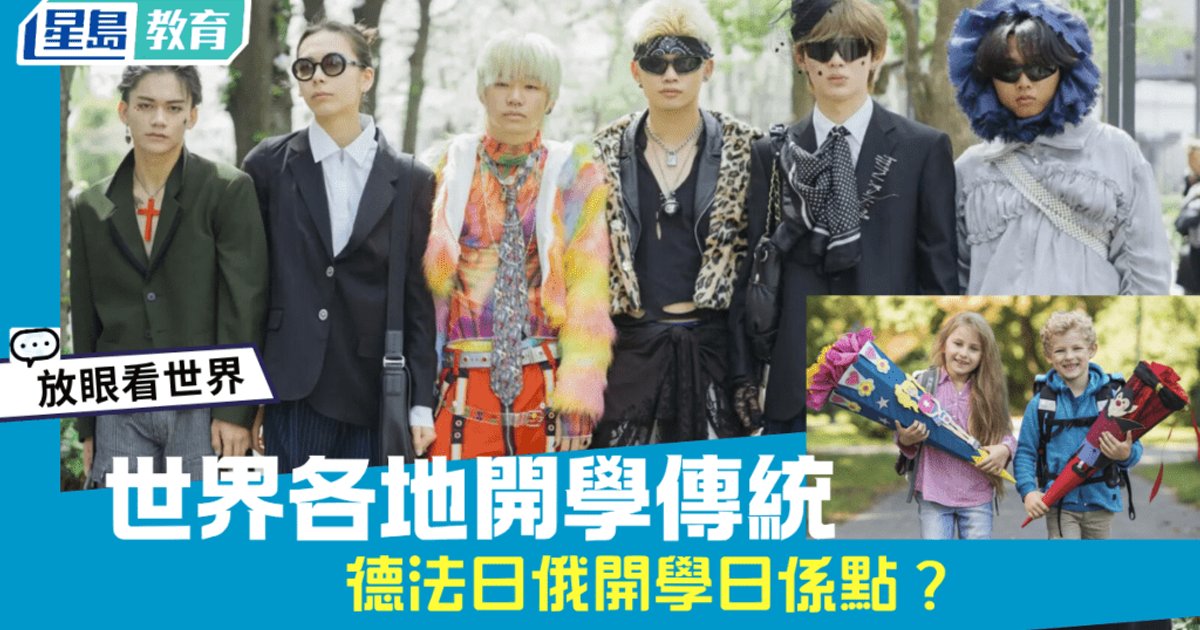
- In Germany, parents traditionally give first-year pupils a large, colourful cone-shaped gift called a Schultuete, filled with sweets, stationery and small toys each September.
- The Schultuete custom dates back to 19th-century Saxony in eastern Germany and is meant to wish children a sweet and smooth start to learning.
- In France, the early-September return to school is known as La Rentree, and schools commonly issue detailed shopping lists for bags, paper, folders and stationery.
- French schools may even specify the size and style of supplies, allowing parents to prepare by following the list item by item.
- In Japan, the April entrance ceremony is treated formally, though Bunka Fashion College is noted for students wearing highly individual or themed outfits.
- In Russia, September 1 is celebrated nationwide as Knowledge Day, when senior students lead first-year children into school and ring a bell.
- Russia's Knowledge Day ceremony tradition was established in 1984 during the Soviet period and has continued for more than 40 years.
Why It Matters
For Hong Kong families, these customs show that school opening is not only about timetables and supplies but also about how communities ease children into a major life transition. The comparison also underlines how rituals, whether formal or playful, can turn first-day nerves into a shared family milestone.