China-Nepal Border Glacier Disaster Leaves Over 1,000 Missing, Beijing Sends Rescue Teams
SCMP · 3 SOURCESabout 2 hours ago2 MIN
Summary
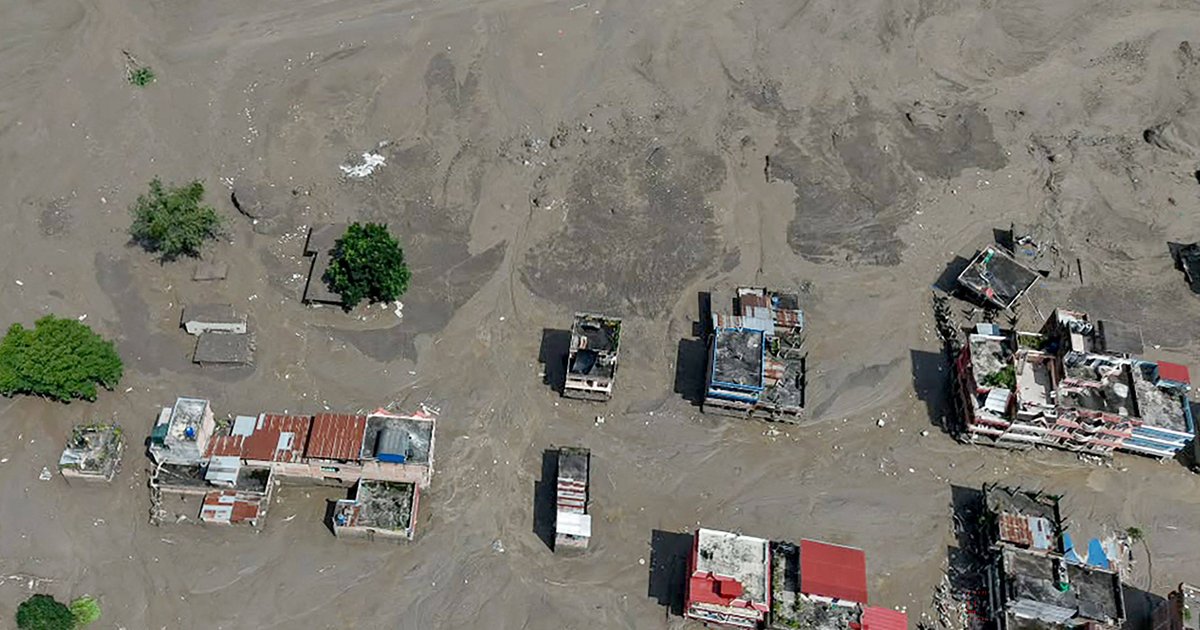
A catastrophic glacier collapse triggered massive flash floods and mudslides at Gyirong Port along the China-Nepal border on Wednesday morning, devastating a crucial trade route and leaving a death toll of at least 362 with over 1,000 people missing across both nations . Chinese Vice-Premier Zhang Guoqing has arrived at the disaster site to coordinate rescue operations, while authorities warn of secondary flood risks from barrier lakes threatening to burst .
Key Points
- The disaster struck Gyirong county in Tibet's Shigatse at approximately 10:30am on Wednesday, originating from a glacier collapse on the Nepali side that evolved into a high-velocity debris flow .
- On the Chinese side, authorities confirmed three deaths and 558 people remain missing, with two survivors rescued so far . Nepal police have recovered 157 bodies, with 484 tourists including 391 foreign nationals from at least 26 countries still missing .
- Among the missing foreigners are 142 Indians (including 133 pilgrims), 47 Americans, 34 Australians, 33 British nationals, and 24 Canadians, according to Nepal's Prime Minister's Office .
- China has mobilised more than 1,500 personnel including firefighters, military troops, and engineering teams to the affected area .
- Two barrier lakes have formed on either side of the border, with Nepal's disaster authority warning that a debris-blocked river is rising and at risk of bursting; China estimates 3 million cubic metres of water will flow into a dammed lake over the next three days with peak flow expected around September 1 .
Why It Matters
Gyirong Port serves as the strategic anchor connecting China and Nepal, handling nearly 30 percent of total bilateral trade volume in 2024 and functioning as a primary overland entry point for Indian pilgrims travelling to Tibet's sacred Mount Kailash and Lake Manasarovar . The disaster not only threatens regional trade routes but also highlights the growing risks of high-altitude glacier instability in the Himalayan region, where climate change is accelerating glacial retreat and increasing the frequency of such catastrophic events .
Gyirong Port serves as the strategic anchor connecting China and Nepal, handling nearly 30 percent of total bilateral trade volume in 2024 and functioning as a primary overland entry point for Indian pilgrims travelling to Tibet's sacred Mount Kailash and Lake Manasarovar . The disaster not only threatens regional trade routes but also highlights the growing risks of high-altitude glacier instability in the Himalayan region, where climate change is accelerating glacial retreat and increasing the frequency of such catastrophic events .