Reusing Takeout Insulation Bags Poses Cancer Risk, Experts Warn
SingTao · 1 SOURCESabout 3 hours ago3 MIN
Summary
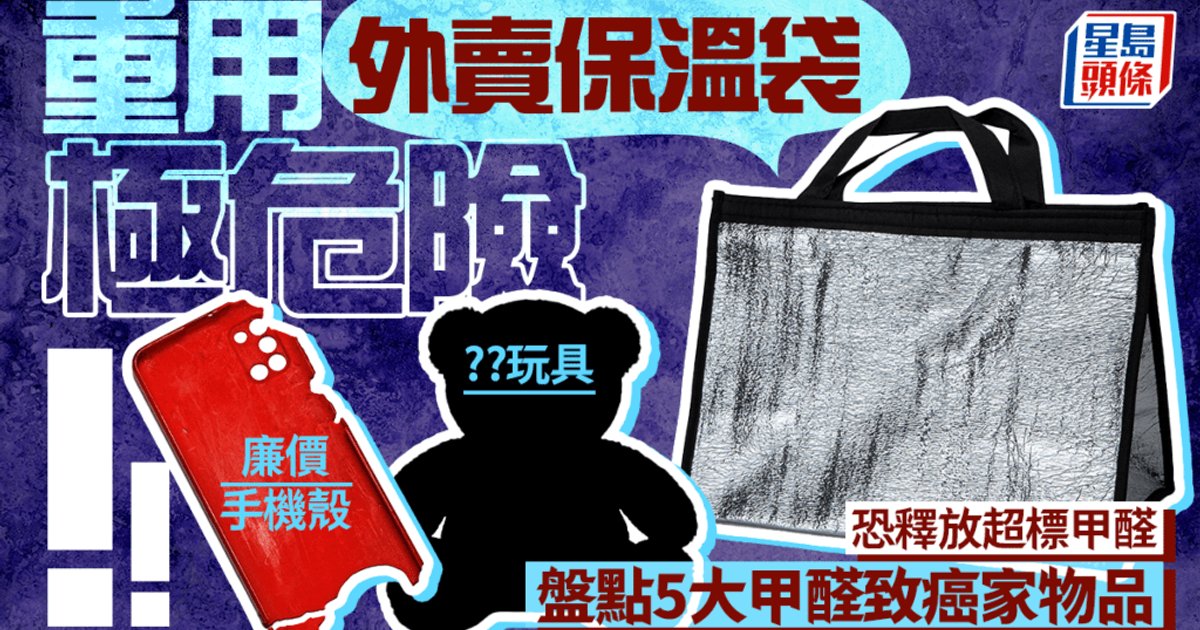
Health experts are raising alarms about the practice of reusing disposable takeout insulation bags after research revealed these everyday items may release dangerous levels of formaldehyde when used to store food. The insulation bags, commonly provided with food delivery orders, often contain cheap industrial adhesives in their seams that can emit volatile organic compounds including formaldehyde, especially when exposed to heat. A comparative study found that vegetables stored in takeout insulation bags for 72 hours contained three to five times higher formaldehyde levels compared to those kept in food-grade storage bags. The International Agency for Research on Cancer (IARC) has classified formaldehyde as a Group 1 carcinogen, with links to nasopharyngeal cancer and myeloid leukemia. Beyond insulation bags, researchers identified several other common household items that may pose similar formaldehyde exposure risks.
Key Points
- Takeout insulation bags typically have aluminum foil outer layers and pearl cotton interiors, but low-cost versions use cheap industrial glue in seams that releases formaldehyde and VOCs .
- Research found vegetables stored in takeout insulation bags for 72 hours showed formaldehyde levels 3 to 5 times higher than those in food-grade storage bags .
- Short-term formaldehyde exposure causes dizziness, headaches, coughing, eye irritation, and skin allergies, while long-term exposure increases nasopharyngeal cancer and leukemia risks .
- The IARC classifies formaldehyde as a Group 1 carcinogen, with studies showing higher exposure doses correlate to greater nasopharyngeal cancer risk .
- Five other common items pose formaldehyde risks: cheap phone cases with strong plastic odors, express delivery cardboard boxes with adhesive coatings, metal badges with glue, squeeze toys, and brightly colored plush toys .
Why It Matters
This warning has significant implications for food safety practices in Hong Kong, where food delivery services are extremely popular and many residents routinely reuse these bags for packed lunches or transporting fresh ingredients. With formaldehyde classified as a known carcinogen, the widespread but largely unaware practice of reusing these single-use items could pose long-term health risks to a large portion of the population. Public health authorities may need to issue clearer guidance on proper disposal of takeout packaging to prevent accidental chemical contamination of food .
This warning has significant implications for food safety practices in Hong Kong, where food delivery services are extremely popular and many residents routinely reuse these bags for packed lunches or transporting fresh ingredients. With formaldehyde classified as a known carcinogen, the widespread but largely unaware practice of reusing these single-use items could pose long-term health risks to a large portion of the population. Public health authorities may need to issue clearer guidance on proper disposal of takeout packaging to prevent accidental chemical contamination of food .