Hong Kong's cardboard collectors struggle as new recycling policy cuts prices
SCMP · 1 SOURCESabout 2 hours ago2 MIN
Summary
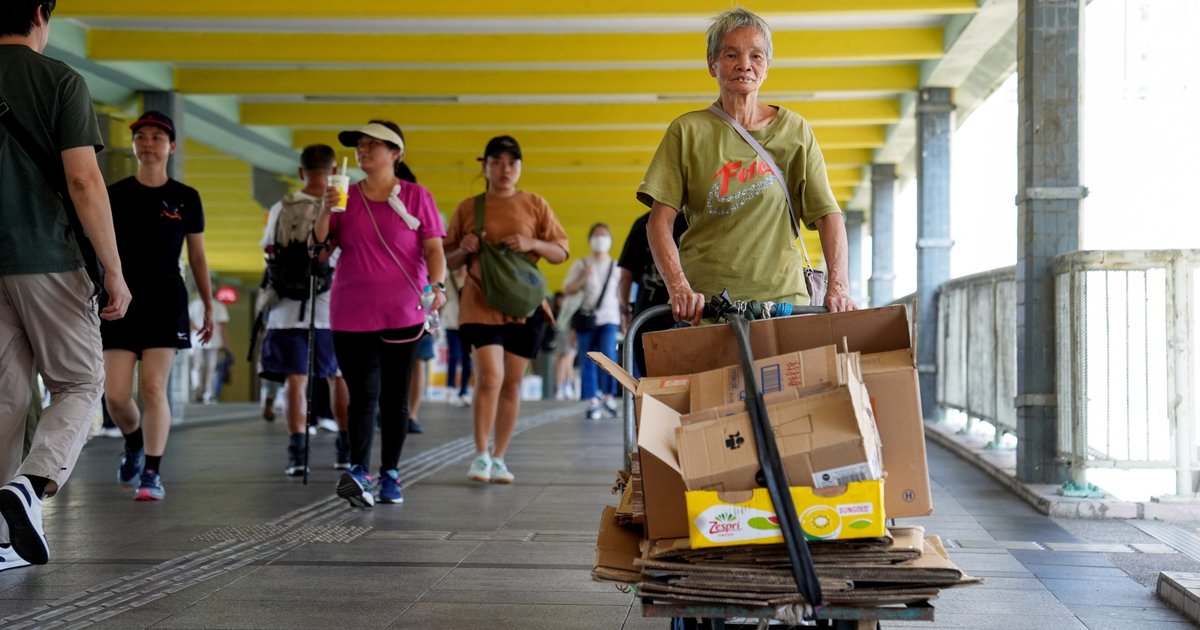
A new policy supporting Hong Kong's only paper pulping facility in Tuen Mun, which took effect on October 1, has caused waste paper prices to plummet, threatening the livelihoods of elderly cardboard collectors known as cardboard grannies. Collectors like Kuang Su-ling, a 63-year-old diabetic eye disease patient, now earn just 60 HK cents per kilogram of waste paper, translating to roughly HK$30 (US$3.80) a day. Industry leaders are calling on the government to restore subsidies to support the sector and these vulnerable workers.
Key Points
- Kuang Su-ling, 63, became a waste paper scavenger after losing her job as a cleaner when she was diagnosed with diabetic eye disease seven years ago
- The rate paid by recycling firms has fallen to 60 HK cents per kilogram of waste paper, and Kuang now earns roughly HK$30 (US$3.80) a day
- A new policy supporting Hong Kong's only paper pulping facility in Tuen Mun took effect on October 1, reducing reliance on waste paper exports and causing downstream prices to fall
- Kuang collects cardboard near Fanling market, building relationships with food and fruit store owners who save their used boxes for her over years of familiarity
- Industry leaders are calling for subsidies to be restored to support the recycling sector and scavengers such as Kuang
Why It Matters
The falling waste paper prices pose an existential threat to Hong Kong's elderly cardboard collectors, many of whom have no alternative income sources. Without government intervention or restored subsidies, these vulnerable workers face the prospect of being unable to sustain their basic living expenses while the city's recycling infrastructure undergoes transformation.
The falling waste paper prices pose an existential threat to Hong Kong's elderly cardboard collectors, many of whom have no alternative income sources. Without government intervention or restored subsidies, these vulnerable workers face the prospect of being unable to sustain their basic living expenses while the city's recycling infrastructure undergoes transformation.