Belgian-American Scientist Francis Halzen Wins 2026 Nobel Prize in Physics
SingTao · 2 SOURCESabout 3 hours ago2 MIN
Summary
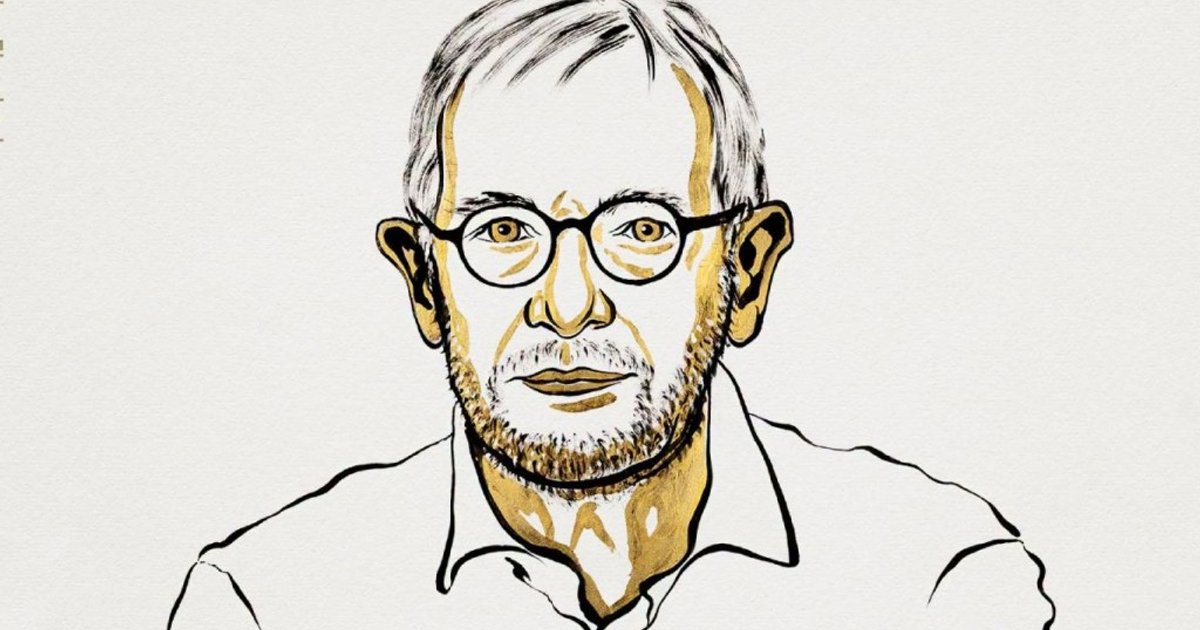
Francis Halzen, an 82-year-old Belgian-American scientist, has been awarded the 2026 Nobel Prize in Physics for his groundbreaking work that established neutrino astronomy as a new field of study. His key insight was recognizing that Antarctic ice could serve as a massive detector for neutrinos, leading to the creation of the IceCube Neutrino Observatory. The Nobel Committee praised his leadership and scientific vision in guiding an international team of researchers and engineers. Halzen, who currently teaches at the University of Wisconsin–Madison, expressed surprise at winning the award, describing it as a wonderful shock while announcing he is preparing a proposal that he hopes the prize will help get approved.
Key Points
- The Nobel Prize in Physics carries a cash award of 12 million Swedish kronor, equivalent to approximately $1.22 million
- The IceCube Neutrino Observatory consists of a one-cubic-kilometer section of Antarctic ice embedded with thousands of light sensors
- Halzen, who is 82 years old, currently serves as a professor at the University of Wisconsin–Madison in the United States
- The Nobel Committee specifically praised Halzen's leadership in coordinating international researchers and engineers to build the facility
- Since 1901, the Nobel Prize in Physics has been awarded 119 times, with six years seeing no prize due to world wars
Why It Matters
The discovery opens an entirely new window into the universe, allowing scientists to detect neutrinos from violent cosmic events such as supernovae and black holes that are invisible to traditional optical telescopes. Halzen's work demonstrates how innovative thinking can transform natural environments into powerful scientific instruments, potentially inspiring similar approaches in other fields of research .
The discovery opens an entirely new window into the universe, allowing scientists to detect neutrinos from violent cosmic events such as supernovae and black holes that are invisible to traditional optical telescopes. Halzen's work demonstrates how innovative thinking can transform natural environments into powerful scientific instruments, potentially inspiring similar approaches in other fields of research .