Non-local Students Need a Livable and Perceptible Hong Kong
HK01 · 1 SOURCESabout 2 hours ago6 MIN
Summary
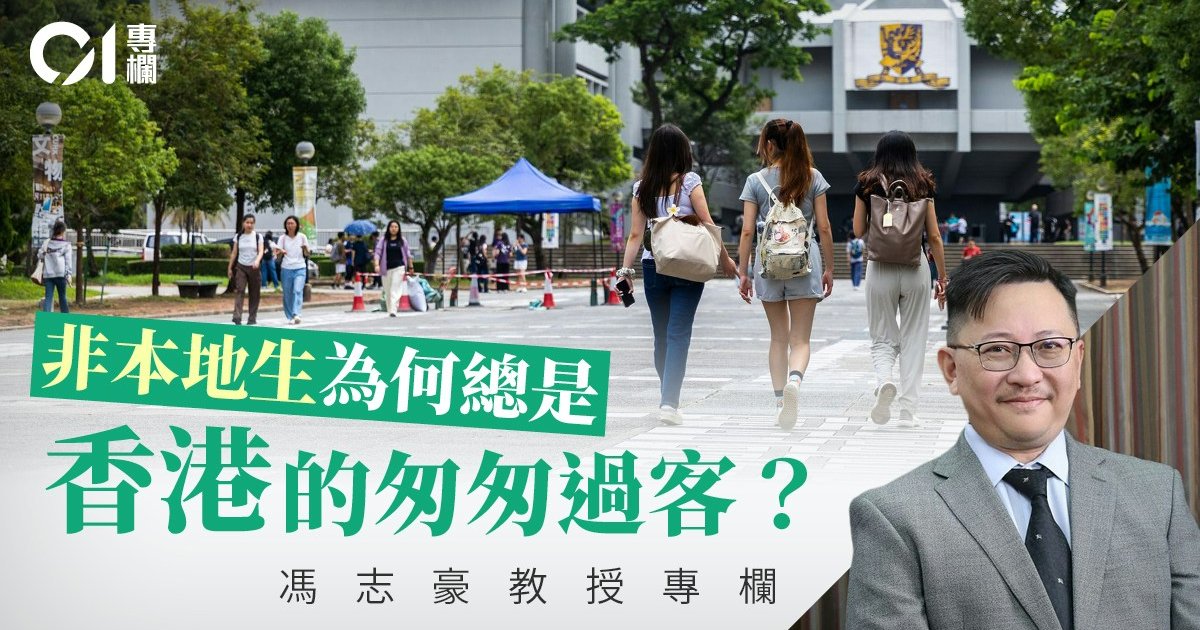
Professor Fung Chi-ho (馮志豪), writing in the Hong Kong 01 column on Sunday, argues that Hong Kong's ambition to become an international higher education hub must look beyond enrollment statistics and university rankings. He contends that if non-local students only experience Hong Kong as an efficient academic venue without forming emotional bonds, "Study in Hong Kong" risks becoming mere short-term educational consumption rather than sustainable talent accumulation. Fung, who works in higher education, observes that many international students' daily routines revolve around campus, dormitories, libraries, laboratories, and nearby malls—with some even returning to mainland cities on weekends. He advocates for community engagement strategies that transform students from observers into active participants in Hong Kong's civic life.
Key Points
- Hong Kong's government has positioned "Study in Hong Kong" as its international brand, raising non-local student quotas and recruiting from the mainland, ASEAN, and Belt and Road nations
- Many non-local students live within narrow zones—campus, dorm, library, nearby shopping malls—with busy academic schedules and cultural unfamiliarity limiting community contact
- After years of study, students often know only famous shopping districts and high living costs, remaining unaware of community livelihoods and local cultural history
- Hong Kong's authentic appeal extends beyond the international financial center image to include Sham Shui Po's historical memory, Tai O's coastal culture, and country park landscapes
- Meaningful community engagement should move beyond one-time visits, instead integrating sustained service learning with local families, elderly residents, and grassroots organizations
Why It Matters
As Hong Kong competes globally for talent, the city risks losing potential long-term contributors if graduates view it merely as a transit station rather than a community worth staying in. Fung's analysis suggests that universities must redesign the non-local student experience to include sustained civic participation—from serving as Scout leaders to volunteering with district organizations—building the interpersonal bonds that transform functional knowledge into genuine belonging .
As Hong Kong competes globally for talent, the city risks losing potential long-term contributors if graduates view it merely as a transit station rather than a community worth staying in. Fung's analysis suggests that universities must redesign the non-local student experience to include sustained civic participation—from serving as Scout leaders to volunteering with district organizations—building the interpersonal bonds that transform functional knowledge into genuine belonging .